
What Piling Work Is — and When a Structure Needs It
A pile is a long column of concrete, steel or timber that carries a structure's load past weak surface soil and into firmer strata below. Piling work is the process of installing these columns and connecting them, through a pile cap, to the structure above.
An open (shallow) foundation is always cheaper and quicker, so piles are used only when the ground or the loads demand them. Typical triggers are:
- Weak or compressible top soil — soft clay, loose sand or filled ground that would settle under the load
- Heavy or concentrated loads — bridge piers, metro viaduct columns, turbine and boiler foundations, storage tanks
- High water table or riverbeds — where open excavation is impractical and scour can undermine a shallow footing
- Expansive soils — black cotton soil in Gujarat, Maharashtra and Madhya Pradesh swells and shrinks with moisture; piles anchor the structure below the active zone
- Uplift and lateral loads — tall structures, towers and retaining structures that must resist wind, seismic or earth pressure
- Adjacent structures — where a deep open excavation would endanger neighbouring buildings
The decision is made by the structural designer from a geotechnical investigation (IS 1892) — borehole logs, Standard Penetration Test (SPT) values, rock levels and groundwater level. Never decide on piling, or on a pile length, without a site-specific soil report.
Types of Piles Used in India
Piles are classified by how they carry load and by how they are installed. The Indian standard for design and construction is IS 2911, which has separate parts for each method.
By load transfer:
- End-bearing piles rest on rock or a dense stratum and carry load mainly at the toe
- Friction piles carry load mainly through skin friction along the shaft — common in deep clay deposits
- Most real piles carry load through both, and the design accounts for each
By installation method:
- Bored cast-in-situ piles (IS 2911 Part 1/Sec 2) — a bore is drilled, supported by a casing or bentonite/polymer slurry, then reinforced and concreted in place. The workhorse for bridges, flyovers, metro and industrial work because diameters and depths are flexible and there is no driving vibration.
- Driven cast-in-situ piles (Part 1/Sec 1) — a steel casing with a shoe is driven to depth, then concreted as it is withdrawn. Fast in suitable soils, but vibration and noise limit urban use.
- Driven precast concrete piles (Part 1/Sec 3) — factory-cast piles driven by hammer. Good quality control and speed, but lengths must be planned in advance and splicing adds cost.
- Precast piles in prebored holes (Part 1/Sec 4) — reduces driving vibration near sensitive structures.
- Under-reamed piles (IS 2911 Part 3) — short bored piles with one or more bulbs at the base, widely used for buildings on expansive black cotton soil.
- Steel piles and sheet piles — H-piles, tubular piles and interlocking sheet piles for marine work, cofferdams, cut-off walls and temporary retention.
- Micropiles — small-diameter grouted piles for underpinning and restricted-access sites.
For river bridges with deep scour, well foundations (IRC 78) are often used instead of piles — a large caisson sunk to founding level — and a bridge contractor should be able to execute both.
How to Choose the Right Pile Type
The structural designer fixes the pile type, but owners and EPC teams should understand the trade-offs:
- Ground conditions — boulders and rock favour bored piles with rock sockets; uniform soft clay may suit driven piles; expansive soil suits under-reamed piles for light structures
- Load — very heavy column loads point to large-diameter bored piles, often 1.0 m to 2.0 m, socketed into rock
- Surroundings — near existing buildings, hospitals or railway tracks, avoid driving vibration and choose bored or prebored piles
- Groundwater — a high water table needs slurry-supported boring or full-length casing to keep the bore stable
- Programme — precast piles are fast where lengths are predictable; bored piles are more forgiving when founding levels vary across the site
- Access and headroom — under bridges, inside plants or beside live roads, rig size and headroom can decide the method
A good rule: the method should be chosen for the ground first and the programme second. A fast method that produces defective piles costs far more in testing, remedial piles and delay.
Bored Cast-in-Situ Pile Construction — Step by Step
This is the most common pile in Indian infrastructure. The sequence below follows IS 2911 (Part 1/Sec 2) practice.
1. Setting out and working platform
Pile positions are surveyed from the approved layout and the working platform is levelled and made firm enough for the rig. IS 2911 limits positional deviation (generally 75 mm, or D/10 for smaller piles) and inclination (1 in 150 for vertical piles), so accuracy at setting out matters.
2. Temporary liner (guide casing)
A steel liner is pushed or vibrated into the top few metres to hold loose surface soil, guide the boring tool and prevent the bore collapsing at ground level.
3. Boring under slurry
A hydraulic rotary rig advances the bore with augers and buckets. Below the liner the bore is kept full of bentonite or polymer slurry, which exerts pressure on the walls and holds them stable. Slurry is controlled for density, viscosity (Marsh cone), sand content and pH — IS 2911 gives the acceptance ranges — and is recirculated and desanded.
4. Reaching founding level and cleaning the base
Boring continues to the design depth or the specified rock socket. Depth is checked by sounding, the soil or rock at the toe is verified against the borehole log, and the base is cleaned — loose material left at the toe is the most common cause of poor end-bearing.
5. Lowering the reinforcement cage
The cage is fabricated in a yard to the drawing, with cover blocks (minimum 50 mm clear cover, more in aggressive ground) and stiffener rings so it does not distort when lifted. It is lowered by crane, spliced in sections for long piles, and held at the correct level.
6. Tremie concreting
Concrete (minimum M25 under IS 2911, with a high slump and a high cement content for flowability) is placed through a tremie pipe from the base upward. The tremie stays embedded in fresh concrete throughout, so the rising concrete displaces the slurry instead of mixing with it. Pours must be continuous — a stoppage can create a cold joint or a soil inclusion.
7. Over-casting and liner removal
Concrete is brought up well above the cut-off level so that the contaminated top layer can later be removed, and the liner is extracted while the concrete is still workable.
8. Chipping to cut-off and pile cap
After curing, the pile head is chipped down to sound concrete at cut-off level, reinforcement is bent into the pile cap, and the cap is cast to connect the pile group to the column or pier above.
Pile Testing — Load Tests and Integrity Tests
A pile is buried and cannot be inspected once it is cast, so testing is how the owner gets assurance. Testing is governed by IS 2911 (Part 4) for load tests and IS 14893 for non-destructive integrity testing.
Initial load tests
These are carried out on separate test piles, before or early in the works, to confirm the design capacity. The pile is loaded well beyond its working load using a kentledge (dead weight) or anchor-pile reaction system, and settlement is recorded at each stage. Vertical compression, lateral and pull-out (uplift) tests are done as the design requires.
Routine load tests
These are done on a percentage of working piles, to a lower multiple of the working load, to confirm that production piles behave like the test piles.
IS 2911 (Part 4) derives the safe load of a single pile from the load–settlement curve — for example, two-thirds of the load at which total settlement reaches 12 mm, or half the load at which settlement equals 10% of the pile diameter, whichever is lower.
Integrity tests
These check the pile shaft for defects:
- Low-strain pile integrity test (PIT) — a small hammer blow on the pile head and a sensor reading the reflected wave reveal necking, bulging, cracks or a short pile. Quick and cheap, so it is often done on every working pile.
- Cross-hole sonic logging (CSL) — ultrasonic signals passed between access tubes cast into the pile map the concrete quality along the full length. Specified for large-diameter and critical piles.
- High-strain dynamic testing — a heavy drop weight with strain and acceleration gauges estimates capacity and integrity together, as a faster supplement to static tests where specified.
Ask for test records against the pile schedule — pile number, as-built depth, concrete volume, test results — as part of handover.
Pile Caps and Pile Groups
Piles rarely work alone. A pile cap — a thick RCC block — ties a group of piles together and spreads the column or pier load between them.
- Spacing — piles are usually spaced at about 2.5 to 3 times their diameter so their zones of influence do not overlap too much; closer spacing reduces group efficiency in friction piles
- Embedment — the pile head is embedded into the cap and the pile reinforcement anchored into it
- Edge distance — the cap extends beyond the outer piles to allow for positional tolerance
- Tolerance check — as-built pile positions are surveyed before the cap is designed for construction; piles outside tolerance can change the load share and may need a structural check or an extra pile
For bridges, the pile cap also carries the pier and, in rivers, must be founded and protected against scour.
Common Pile Defects and How Good Contractors Prevent Them
Most pile defects come from a small number of site causes, and almost all are preventable:
- Necking or soil inclusion — the bore wall collapses into fresh concrete. Prevented by correct slurry properties, keeping the slurry level up, and never lifting the tremie out of the concrete.
- Soft toe — loose material left at the base. Prevented by base cleaning and checking depth just before concreting.
- Contaminated concrete at the head — slurry and laitance at the top. Prevented by adequate over-casting and chipping down to sound concrete.
- Cage displacement or lifting — the cage floats or shifts during concreting. Prevented by proper cage fixing and controlled concrete placement.
- Cold joints — interrupted pours. Prevented by confirming concrete supply, a standby plant or mixer, and enough transit mixers before starting a pile.
- Out-of-position or inclined piles — prevented by accurate setting out, a level platform and verticality checks during boring.
When a defect is found, the options include coring and grouting, a structural check at reduced capacity, or an additional pile with a redesigned cap — all slower and more expensive than getting it right first time.
Piling for Different Types of Structures
Bridges, flyovers and ROBs
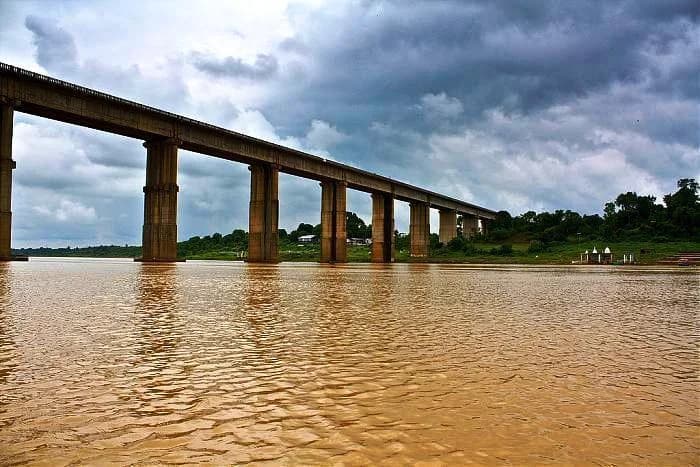
Large-diameter bored piles in groups under each pier and abutment, designed for vertical load, braking and seismic forces and, in rivers, for scour depth. Bridge foundations follow IRC 78 alongside IS 2911.
Metro viaducts
Piles under each viaduct pier, built in narrow medians beside live traffic, so compact rigs, traffic management and strict spoil and slurry handling matter as much as the pile itself.
Industrial plants
Piles under heavy equipment, pipe racks, silos and storage tanks, often with tight settlement limits for rotating machinery. Common in GIDC and MIDC estates with filled or soft ground.
Power plants
Piled foundations for turbine-generator decks, boilers, chimneys and cooling towers, where differential settlement must be minimal.
Buildings
Bored or under-reamed piles under high-rise towers, hospitals and buildings on expansive or reclaimed ground.
Water and hydraulic structures
Piles and sheet piling for intake wells, aqueducts, pump houses and cut-off walls.
How to Choose a Piling Contractor — A Checklist
Piling is where a project's hidden risk is concentrated. Before awarding the work, check:
- Own rigs and support plant — hydraulic rotary rigs, slurry plant, cranes and tremie sets owned rather than hired at short notice
- Range — pile diameters and depths the contractor has actually built, and experience in rock sockets if your site needs them
- Quality system — written IS 2911 method statements, slurry testing at site, cage inspection, pour records for every pile
- Testing — arrangements for initial and routine load tests and integrity testing, with records handed over pile by pile
- Concrete supply — batching plant capacity and transit mixers to guarantee continuous pours
- Safety — rig stability on the platform, protection of open bores, lifting plans for cages, and an ISO 45001 safety system
- Single-point responsibility — when the same contractor builds the piles and the structure above them, there is no gap between the piling sub-contract and the main contract over positions, levels or defects
How VRSIPL Executes Piling and Foundation Works
VRSIPL executes piling and deep foundation works as part of its bridge, flyover, railway, metro, industrial and power-plant EPC projects across India. Bored cast-in-situ piles from 0.6 m to 2.0 m diameter and to depths of 30 m and more are bored with hydraulic rotary rigs from VRSIPL's own equipment fleet, built to IS 2911, and load- and integrity-tested before the substructure proceeds.
Alongside piling, VRSIPL builds pile caps and pile-group foundations, well foundations for river bridges, sheet piling and cut-off walls for hydraulic structures, and raft and pedestal foundations for heavy industrial equipment. Because the same team then builds the piers, girders, plant structures or buildings on top, clients get one contractor accountable from the first borehole to the finished structure.
FAQ — Piling Work and Pile Foundations
Q: What is piling work in construction?
Piling work is the installation of piles — long concrete, steel or timber columns — that carry a structure's load through weak surface soil into firmer strata or rock below, connected to the structure through a pile cap.
Q: Which is the most common type of pile in India?
The bored cast-in-situ concrete pile, built under IS 2911 (Part 1/Sec 2). It is used for most bridges, flyovers, metro viaducts and industrial foundations because diameter and depth can be adjusted to the ground and there is no driving vibration.
Q: Which Indian standard covers pile foundations?
IS 2911 covers the design and construction of pile foundations, with separate parts for driven, bored, precast and under-reamed piles, and Part 4 for load testing. IS 14893 covers non-destructive integrity testing, and IRC 78 covers foundations for road bridges.
Q: What is the difference between an initial and a routine pile load test?
An initial load test is done on a separate test pile, loaded well beyond working load, to confirm the design capacity. A routine load test is done on a percentage of working piles, to a lower load, to confirm the production piles behave as designed.
Q: Why is bentonite used in piling?
Bentonite (or polymer) slurry fills the bore and exerts pressure on its walls, keeping them stable below the water table until the reinforcement cage is placed and the pile is concreted by tremie.
Q: When are under-reamed piles used?
Under-reamed piles, covered by IS 2911 (Part 3), are short bored piles with enlarged bulbs at the base. They are widely used for buildings on expansive black cotton soil, where they anchor the structure below the zone that swells and shrinks with moisture.
Related Topics
Continue Reading
Related Articles
Pharma Plant Civil Construction in GIDC Gujarat — Site Development to Handover
Choosing an STP Civil Contractor in India — Municipal & Industrial Guide 2026
ETP and ZLD Civil Works for Chemical Industries in GIDC — Complete Guide
Our Related Services
VRSIPL Services Covered in This Guide
Start Your Project
Have an Infrastructure Project?
Contact VRSIPL.
48 years of civil EPC delivery across India — WTP, STP, ETP, industrial civil, power plant, roads, and railways. Class-AA Gujarat. ISO 9001 | 14001 | 45001.