
What Is an STP Civil Contractor?
When a city, municipality, or industrial plant decides to build a Sewage Treatment Plant (STP), they typically deal with two distinct categories of vendors: the STP equipment supplier and the STP civil contractor. Understanding this distinction is essential — and confusing the two is one of the most common and costly procurement mistakes made in urban infrastructure projects.
An STP equipment supplier provides the process machinery: blowers, aeration systems, membrane bioreactors (MBR), Sequencing Batch Reactor (SBR) control systems, MBBR carriers, submersible pumps, sludge thickeners, filter presses, and SCADA control panels. The equipment supplier designs the treatment process, selects the technology, and installs the electromechanical systems.
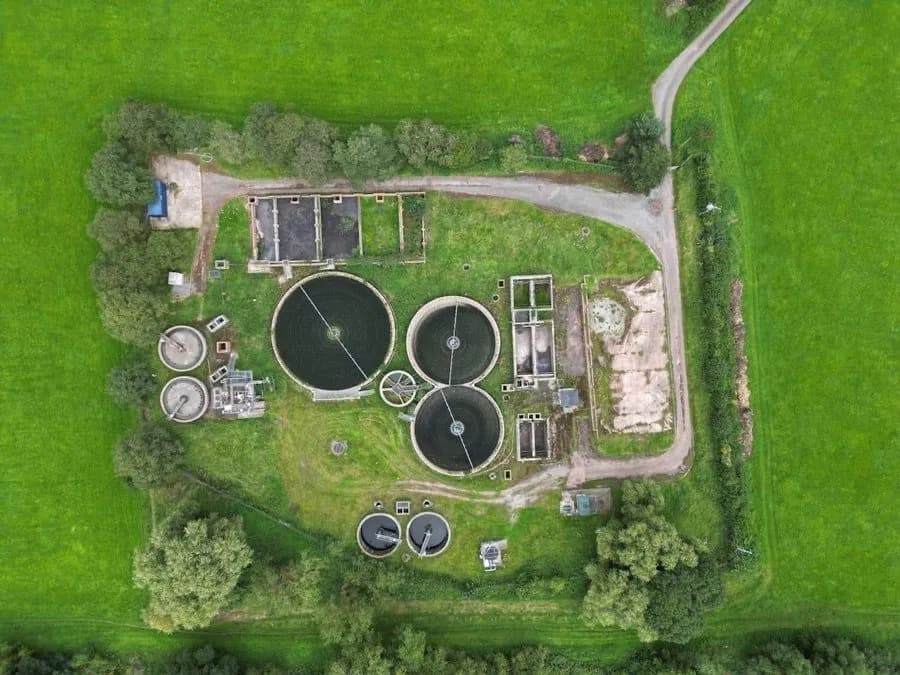
An STP civil contractor builds the physical infrastructure that houses and contains all of this: the reinforced concrete tanks that hold sewage at various treatment stages, the buildings that house electrical panels and blowers, the inlet and outlet structures, the roads inside the plant, the compound wall, the drainage systems, and the operator facilities. The civil contractor does not provide pumps or blowers — they build the chambers in which those pumps and blowers are installed.
Both are essential, but they require entirely different expertise. The civil contractor must understand watertight concrete construction, IS:3370 (the Indian standard for liquid retaining structures), safe excavation in wet and unstable ground, and the precise civil dimensions required by each unit process. A civil contractor who has only built factories or roads will struggle on an STP project. You need a contractor with dedicated STP civil experience — and verifiable references.
Key Civil Structures in an STP
A sewage treatment plant contains a sequence of civil structures, each serving a specific purpose in the treatment chain. The exact configuration varies with the treatment technology (SBR, MBBR, ASP, MBR, etc.), but the following structures are present in most municipal and industrial STPs:
Inlet Chamber and Screen Chamber:
Raw sewage arrives at the plant through the inlet main. The inlet chamber receives this flow and distributes it to the fine screens, which remove rags, plastics, and coarse solids. Civil requirements: precise flow distribution, stainless steel screen frame civil recesses, bypass channel with penstock gates, screenings washing area with drain channels.
Grit Chamber:
After screening, sewage flows through the grit chamber — typically a horizontal flow tank with an aerated or vortex section — where grit, sand, and heavy particles settle. Civil requirements: hopper bottom design for grit collection, grit classifier civil platform, dewatering area.
Aeration Tanks (SBR / MBBR / ASP):
This is the largest civil element in most STPs — the biological treatment tank where sewage is aerated and the activated sludge process takes place. SBR tanks are large rectangular concrete tanks (typically 10–25m wide, 5–8m deep, 20–50m long) with precise floor levels for decanter operation. MBBR tanks require special embedded pipe guides for carrier media retention screens. Civil requirements: IS:3370 watertight design, crack-width control, precise internal levels for process equipment mounting.
Secondary Clarifier:
The treated effluent from biological treatment flows to the secondary clarifier (circular settling tank) where sludge settles to the bottom and clarified water overflows the peripheral weir. Civil requirements: circular RCC tank with precise level weir, conical or hopper bottom, central rotating sludge collection mechanism civil support, scum trough.
Sludge Thickener and Drying Beds:
Settled sludge is thickened in a gravity thickener (circular tank) before dewatering on sludge drying beds (open RCC cells with gravel/sand drainage medium) or filter press. Civil requirements: thickener similar to clarifier, drying beds with underdrain piping and drainage channels.
Pump House:
Houses sewage lift pumps, sludge recirculation pumps, and treated effluent transfer pumps. Civil requirements: underground or semi-underground wet well, cable trenches, pump installation pits, overhead crane runway beam (for pump maintenance), anti-flooding design for wet well.
Blower Room and Control Room:
The blower room houses the aeration blowers that supply oxygen to biological treatment. Civil requirements: heavy floor slab for blower anti-vibration mounts, vibration-isolated mounting plinths, ventilation provisions, noise-attenuation walls. Control room houses SCADA panels and operator workstation.
Boundary Wall, Internal Roads, and Drainage:
Every STP requires a compound wall (as per municipal/authority specification), internal roads (capable of carrying sludge tankers and maintenance vehicles), and a comprehensive stormwater drainage network.
Government Projects — AMRUT, Smart City, NRCP, UIDSSMT
The bulk of municipal STP civil construction in India is funded through central government programmes administered by the Ministry of Housing and Urban Affairs (MoHUA). Understanding these programmes is essential for any civil contractor seeking to participate in the municipal STP market.
AMRUT (Atal Mission for Rejuvenation and Urban Transformation):
AMRUT 1.0 (2015–2020) and AMRUT 2.0 (2021–2026) fund water supply and sewerage projects in cities with populations above 1 lakh. Under AMRUT, sewerage projects include sewer network construction, pumping stations, and STP civil works. Tenders are issued by ULBs (Urban Local Bodies) or state-level programme management units. Pre-qualification requirements typically include minimum turnover thresholds, past similar work experience (quantum of civil work in water/wastewater), and class registration.
Smart City Mission:
The Smart City Mission funds integrated infrastructure improvements across 100 selected smart cities. Many Smart City SPVs (Special Purpose Vehicles) have funded STP upgrades, new STPs, and sewage pumping station modernisation. Tendering is done by the SPV — which is a government company — and follows modified procurement norms compared to state PWD.
NRCP (National River Conservation Plan):
NRCP funds STPs specifically designed to treat sewage before it reaches major rivers — particularly the Ganga, Yamuna, Krishna, Godavari, and other polluted river stretches. NRCP-funded STPs are typically larger (10–100 MLD capacity) and are administered through state PHED or river development authority.
UIDSSMT (Urban Infrastructure Development Scheme for Small & Medium Towns):
Earlier scheme (now largely wound down) that funded water supply and sewerage in smaller towns. Many existing STPs in tier-3 cities were built under UIDSSMT.
For civil contractors, the key pre-qualification criteria in government STP tenders are: (a) Class-A or Class-AA registration with the state PWD, (b) minimum 3 years of experience in watertight RCC tank construction, (c) having executed similar STP civil work worth 30–80% of estimated cost in a single contract, and (d) minimum annual turnover (typically 2–3x estimated cost). VRSIPL qualifies on all of these criteria.
Industrial STP vs Municipal STP Civil Works
Industrial STPs and municipal STPs both treat wastewater, but their civil characteristics differ significantly — and a contractor experienced only in municipal work can struggle with industrial STP civil.
Effluent Characteristics:
Industrial effluent is often chemically complex — high COD, TDS, heavy metals, solvents, or acidic/alkaline pH. The civil structures must account for chemical attack on concrete. This typically means acid-resistant brick lining or epoxy coating in equalization tanks and primary treatment tanks, polymer-modified concrete in sumps, and chemical-resistant drain channels throughout the plant.
Equalization Tank Sizing:
Industrial processes generate highly variable effluent — batch process plants discharge large volumes during washing cycles and minimal volumes during reaction phases. The equalization tank must be oversized (often 6–12 hours of peak flow) to buffer this variation. For a 500 KLD industrial STP, the equalization tank might be 500–700 cubic metres — a significant civil structure in itself.
Hazardous Area Classification:
For STPs treating effluent from pharmaceutical, petrochemical, or solvent-handling plants, the equalization tank and certain other areas may be classified as hazardous (Zone 1 or Zone 2) under IS:5571 (Hazardous Area Classification). Civil structures in these areas must be designed to prevent spark hazards — no ferrous fixtures that could generate sparks, proper bunding, sealed surface drainage.
ZLD (Zero Liquid Discharge) Civil Additions:
Industrial STPs in GIDC/CETP zones often include ZLD equipment — Multi-Effect Evaporators (MEE), Agitated Thin Film Dryers (ATFD), or evaporation ponds. These require civil structures beyond the typical STP scope: MEE building (high bay, heavy slab for evaporator loads, vibration isolation), salt storage area (RCC storage bunker), and evaporation ponds (clay-lined or HDPE membrane-lined embankment ponds).
What to Check Before Hiring an STP Civil Contractor
Selecting the wrong civil contractor for an STP project leads to watertight failures, structural defects in tanks, delays in plant commissioning, and regulatory rejection during pollution board inspection. Here are the essential checks:
1. Government Registration Class:
For government projects, the contractor must hold the requisite class registration (Class-A, Class-AA, or Super Class) with the relevant state authority. Verify this registration is current and covers wastewater/civil works.
2. IS:3370 Experience:
The contractor must have demonstrable experience in designing and constructing watertight RCC structures to IS:3370. Ask for reference projects and visit at least one completed STP.
3. ISO Certifications:
ISO 9001:2015 (quality management) ensures documented processes for concrete quality control. ISO 14001:2015 and ISO 45001:2018 show environmental and safety commitment.
4. Past STP Project List:
Ask for a list of STP civil projects completed in the last 7 years — including project name, location, client, capacity (MLD), and contract value. Verify at least 3 references by direct client contact.
5. Equipment Fleet:
Confirm the contractor owns — not rents — concrete batching plant(s), transit mixers, concrete pumps, shuttering material, and dewatering pumps. STP civil in water-table zones requires owned dewatering equipment.
6. Watertight Concrete Track Record:
Ask specifically about their watertight concrete process: mix design, admixtures, pour sequence for large tanks, curing procedure, and water-tightness testing (ponding or vacuum testing). A contractor who cannot describe this process in detail should not be awarded an STP civil contract.
VRSIPL's STP Civil Track Record
VRSIPL has built an exceptional track record in STP civil construction over four decades of operation. With 40+ STPs completed and a cumulative treated capacity exceeding 200 MLD, VRSIPL is among the most experienced STP civil contractors operating across western and central India.
Our STP civil portfolio spans municipal corporation projects under Smart City Mission and AMRUT, GWSSB (Gujarat Water Supply and Sewerage Board) sewerage scheme contracts, industrial STP civil for pharma and chemical plants in GIDC estates, and CETP (Common Effluent Treatment Plant) civil works for industrial clusters.
Notable project achievements include STP civil works for multiple Smart City SPVs in Gujarat, large-scale SBR-based STP civil structures for GWSSB, and industrial STP/ETP civil packages for major API manufacturers and dye chemical plants across Ankleshwar, Panoli, and Vatva GIDC.
VRSIPL's watertight concrete construction process is based on IS:3370 compliance, M35-grade concrete with fly ash and plasticiser, continuous pours for tank walls using tower cranes, systematic curing (7 days minimum wet curing), and hydraulic water pressure testing of all tanks before handover. Our concrete quality record shows a zero-failure rate on watertightness testing across all STP projects completed in the last decade.
FAQ — STP Civil Contractor Selection in India
Q1: What is the difference between an STP civil contractor and an STP turnkey contractor?
An STP civil contractor handles only the civil scope: RCC tanks, buildings, roads, boundary wall, and external works. An STP turnkey contractor handles civil plus electromechanical (pumps, blowers, aeration systems, SCADA). VRSIPL is an STP civil contractor — we build the civil structures, while the equipment vendor is typically a separate contract. However, we co-ordinate closely with the equipment vendor to ensure civil dimensions and anchor bolt positions exactly match process equipment requirements.
Q2: How long does STP civil construction typically take?
For a 5 MLD STP, civil construction takes 8–12 months from site handover. For a 20–50 MLD STP, expect 14–20 months. For large 100+ MLD STPs, the civil programme may extend to 24–30 months. VRSIPL has successfully delivered multiple STP civil projects ahead of contractual completion dates through structured programme management and adequate resource deployment.
Q3: Can VRSIPL execute STP civil in waterlogged or high water-table sites?
Yes. High water-table excavation is a common challenge in low-lying urban STP sites. VRSIPL's approach includes wellpoint dewatering or borehole dewatering systems, sheet pile staging for unstable excavation in cohesionless soils, and raft foundation design for waterlogged conditions. We have executed STP civil in marshy and high water-table sites in coastal Gujarat and riverine zones in Madhya Pradesh.
Q4: Does VRSIPL provide water-tightness testing and certificates for STP tanks?
All STP tank civil works executed by VRSIPL undergo mandatory water-tightness testing — either by ponding (filling the tank with water and measuring water level drop over 24–48 hours) or vacuum box testing for buried structures. We provide test certificates with specific water loss measurements and acceptance criteria per IS:3370. This documentation is typically required by the client's PMC and by the pollution control board during commissioning inspection.
Q5: Which states does VRSIPL execute STP civil projects in?
VRSIPL is actively executing or has completed STP civil projects in Gujarat, Madhya Pradesh, Maharashtra, and Rajasthan. Our class registrations and pre-qualification credentials cover these states for municipal and government STP tenders. For private industrial clients, we can mobilise to any state in India.
STP Technology Comparison — Civil Requirements
Choosing the right STP technology directly affects the civil scope and cost. Here is how the four most common biological treatment technologies compare from a civil contractor's perspective:
<div class="overflow-x-auto my-6"><table class="w-full text-sm border-collapse border border-gray-200"><thead><tr class="bg-[#0C1530] text-white"><th class="border border-gray-300 px-4 py-3 text-left">Technology</th><th class="border border-gray-300 px-4 py-3 text-left">Tank Type</th><th class="border border-gray-300 px-4 py-3 text-left">Civil Complexity</th><th class="border border-gray-300 px-4 py-3 text-left">Typical Depth</th><th class="border border-gray-300 px-4 py-3 text-left">Best For</th></tr></thead><tbody><tr class="bg-white"><td class="border border-gray-200 px-4 py-3 font-medium">SBR (Sequencing Batch Reactor)</td><td class="border border-gray-200 px-4 py-3">Rectangular RCC</td><td class="border border-gray-200 px-4 py-3">Medium — precise decanter civil</td><td class="border border-gray-200 px-4 py-3">4.5–6.5 m</td><td class="border border-gray-200 px-4 py-3">Municipal STPs 2–50 MLD</td></tr><tr class="bg-gray-50"><td class="border border-gray-200 px-4 py-3 font-medium">MBBR (Moving Bed Biofilm Reactor)</td><td class="border border-gray-200 px-4 py-3">Rectangular RCC with screen guides</td><td class="border border-gray-200 px-4 py-3">Medium — carrier retention civil</td><td class="border border-gray-200 px-4 py-3">4.0–5.5 m</td><td class="border border-gray-200 px-4 py-3">Industrial STPs, capacity upgrades</td></tr><tr class="bg-white"><td class="border border-gray-200 px-4 py-3 font-medium">ASP (Activated Sludge Process)</td><td class="border border-gray-200 px-4 py-3">Large rectangular RCC + circular clarifier</td><td class="border border-gray-200 px-4 py-3">High — largest civil footprint</td><td class="border border-gray-200 px-4 py-3">4.0–5.0 m</td><td class="border border-gray-200 px-4 py-3">Large municipal STPs 10–200 MLD</td></tr><tr class="bg-gray-50"><td class="border border-gray-200 px-4 py-3 font-medium">MBR (Membrane Bioreactor)</td><td class="border border-gray-200 px-4 py-3">Compact RCC membrane tank</td><td class="border border-gray-200 px-4 py-3">Low footprint, high precision civil</td><td class="border border-gray-200 px-4 py-3">3.5–5.0 m</td><td class="border border-gray-200 px-4 py-3">Space-constrained sites, high reuse quality</td></tr></tbody></table></div>
Related Topics
Continue Reading
Related Articles
Jal Jeevan Mission WTP Civil Works — How VRSIPL Delivers Water to Rural India
Pharma Plant Civil Construction in GIDC Gujarat — Site Development to Handover
ETP and ZLD Civil Works for Chemical Industries in GIDC — Complete Guide
Our Related Services
VRSIPL Services Covered in This Guide
Start Your Project
Have an Infrastructure Project?
Contact VRSIPL.
48 years of civil EPC delivery across India — WTP, STP, ETP, industrial civil, power plant, roads, and railways. Class-AA Gujarat. ISO 9001 | 14001 | 45001.