
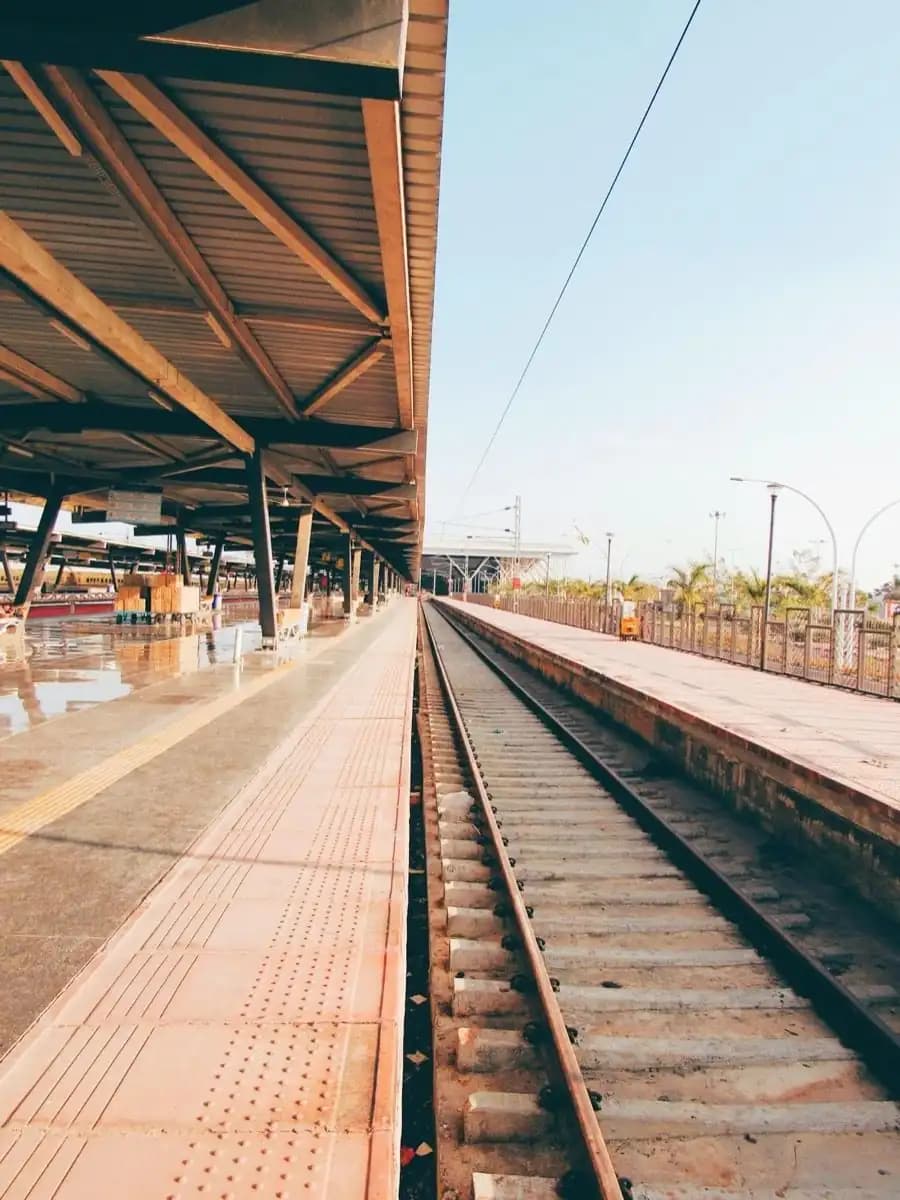
Railway Construction in India — Scale and Opportunity
India's railway network is undergoing its largest expansion since independence. The National Rail Plan targets a network of 200,000 km by 2030 — up from the current 68,000 km. This means 5,000–7,000 km of new track construction annually, covering new lines, doubling of existing single-line sections, gauge conversion from metre gauge to broad gauge, and dedicated freight corridors.
The key organisations driving this expansion are:
Indian Railways (IR):
The parent organisation, executing works through its zonal railways. **RVNL (Rail Vikas Nigam Limited):** The dedicated construction arm executing new line, doubling, and gauge conversion projects across India. **DFCCIL (Dedicated Freight Corridor Corporation):** Building the Eastern and Western dedicated freight corridors. **KRCL (Konkan Railway Corporation Limited):** Executing projects in challenging terrain. **NHSRCL:** Executing the Mumbai-Ahmedabad High Speed Rail corridor.
VRSIPL has been executing railway civil works since 2008, primarily for RVNL and Indian Railways, with projects spanning formation earthwork, major and minor bridges, station buildings, and platform construction.
Railway Formation — The Track Foundation
Railway formation is the prepared earth surface on which the track structure (ballast, sleepers, rails) rests. It is the single most critical element of railway construction — a weak formation causes track geometry defects, speed restrictions, and derailment risk.
Formation Width:
For a single broad-gauge line, the formation width is 6.1 metres at the top for straight track (increasing on curves). For doubling, total formation width is typically 11.0–11.9 metres.
Compaction Standard:
Railway formation demands 100% Standard Proctor Density (not Modified Proctor as in highways). The top 500mm (blanket layer) must use approved granular material with minimum CBR 15%.
Tolerances:
Formation level must be within ±25mm of design level. Cross-slope is maintained at 1:30 for drainage. These are much tighter than highway tolerances.
Embankment Construction:
Railway embankments are built in 200mm lifts with strict moisture control. Side slopes are typically 2:1 (horizontal:vertical). For embankments exceeding 6 metres, geotextile reinforcement or stepped construction is specified.
Cutting in Rock:
Where the railway line passes through hills, controlled blasting and rock cutting form the railway cutting. Catch drains on both sides prevent slope water from reaching the formation.
VRSIPL has constructed over 120 km of railway formation across projects in Madhya Pradesh, Gujarat, and Bihar.
Railway Bridges — Design for Dynamic Train Loads
Railway bridges are structurally different from highway bridges. They must carry concentrated axle loads of 25 tonnes (standard loading) at speeds up to 160 km/h, with impact factors that increase effective load by 50–100%. Indian Railways uses three standard loading patterns:
Modified Broad Gauge Loading (MBG):
For main-line bridges on trunk routes. **Heavy Mineral Loading (HM):** For dedicated mineral routes and freight corridors. **25t Axle Load Standard:** For DFCCIL freight corridors.
Types of railway bridges:
Minor Bridges (span < 6.1m):
RCC slab or box structures — the workhorses of railway drainage. **Major Bridges (span > 6.1m):** Steel plate girders, PSC (prestressed concrete) girders, or steel truss bridges on RCC/well foundations. **Special Structures:** Cable-stayed bridges, bowstring arch bridges, and segmental construction for major river crossings.
Foundation Types:
- **Open foundations** for minor bridges with rock/hard strata within 3m. - **Pile foundations** (bored cast-in-situ piles, 1000–1500mm dia) for major bridges in alluvial soil. - **Well foundations** (traditional Indian railway method) for major river crossings with deep scour.
All railway bridge construction requires CRS (Commissioner of Railway Safety) approval before train operation commences.
Station Buildings and Platform Construction
Modern railway stations are significant civil structures combining functionality, passenger amenities, and architectural expression. The civil scope includes:
Platform Construction:
Raised platforms (840mm above rail level for BG) with RCC retaining walls, PCC/kota stone flooring, platform shelters with steel trusswork, and FOB (Foot Over Bridge) columns embedded in the platform structure.
Station Building:
Main booking hall, ticket counters, waiting halls (with separate ladies and general areas), station master's room, control room, and administrative offices. Modern stations under Amrit Bharat scheme include escalators, lifts, and air-conditioned waiting areas.
Foot Over Bridge:
Steel or RCC FOBs connecting platforms — typically 4–6 metre clear width with staircases, escalators, and lift shafts.
Service Buildings:
Crew rest house, running rooms, signal and telecom equipment rooms, and electrical sub-station buildings.
VRSIPL has constructed 15+ station buildings and platforms across railway projects, including modern Amrit Bharat-standard stations with full amenity packages.
Track Laying and Ballast — Completing the Railway
While track laying is typically handled by specialist track machines, the civil contractor prepares everything up to and including the blanket layer. The track structure comprises:
Ballast:
300mm cushion of crushed stone (specific gravity > 2.6, Los Angeles abrasion < 30%) spread on the formation blanket. The civil contractor often supplies and spreads the initial ballast layer.
Sleepers:
Pre-stressed concrete sleepers (PSC mono-block) spaced at 1,540 per km for main lines.
Rails:
60 kg/m (UIC 60) high-strength head-hardened rails, now supplied in 260-metre welded panels and flash-butt welded into continuous welded rail (CWR) lengths of 1 km+.
The civil contractor's interface with track work:
- Formation and blanket layer handover to track machine operators - Level crossing construction (RCC slab between running rails and on approaches) - Retaining walls and breast walls in cutting zones - Platform coping alignment with final rail level
This interface coordination is critical — formation levels directly determine final track geometry.
FAQ — Railway Construction
Q: What qualifications does a contractor need for RVNL railway projects?
RVNL requires relevant experience in railway civil works (formation, bridges, station buildings), minimum annual turnover of 1.5x the estimated contract value, and technical capability (equipment and key personnel). Prior railway experience is strongly weighted in technical evaluation.
Q: How is railway construction different from highway construction?
Tighter formation tolerances (±25mm vs ±50mm), dynamic load considerations for bridges, CRS safety inspection requirements, and the need to coordinate with operating traffic during doubling/third-line works.
Q: How long does it take to build 50 km of new railway line?
Typically 30–36 months for a complete new line section including formation, bridges, station buildings, and track linking. Doubling projects may take 24–30 months as the existing line provides logistic access.
Q: What is the cost of building 1 km of new railway line?
Plain terrain: ₹8–12 crore/km including formation, bridges, stations, and track. Hilly terrain with tunnels: ₹25–100+ crore/km depending on tunnel length and geological conditions.
Related Topics
Continue Reading
Related Articles
Metro Rail Civil Construction in India — Elevated Viaduct, Stations & Tunnels
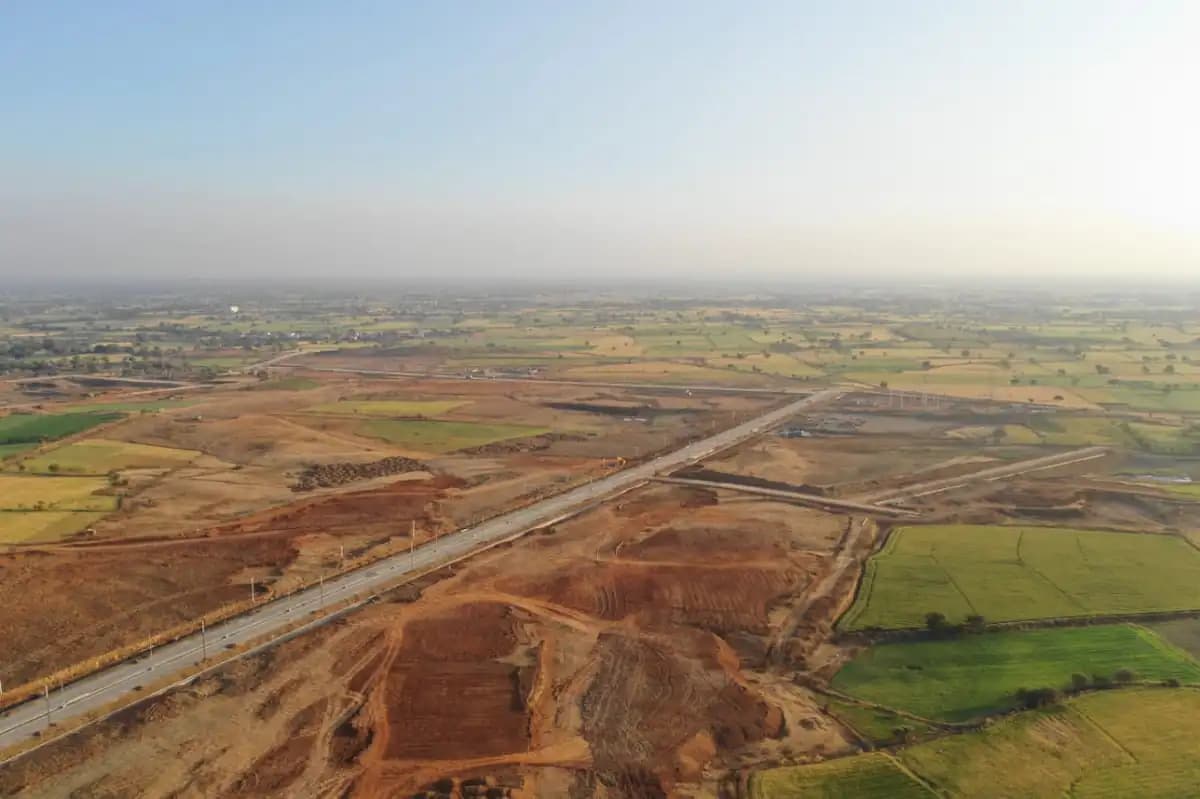
Pharma Plant Civil Construction in GIDC Gujarat — Site Development to Handover
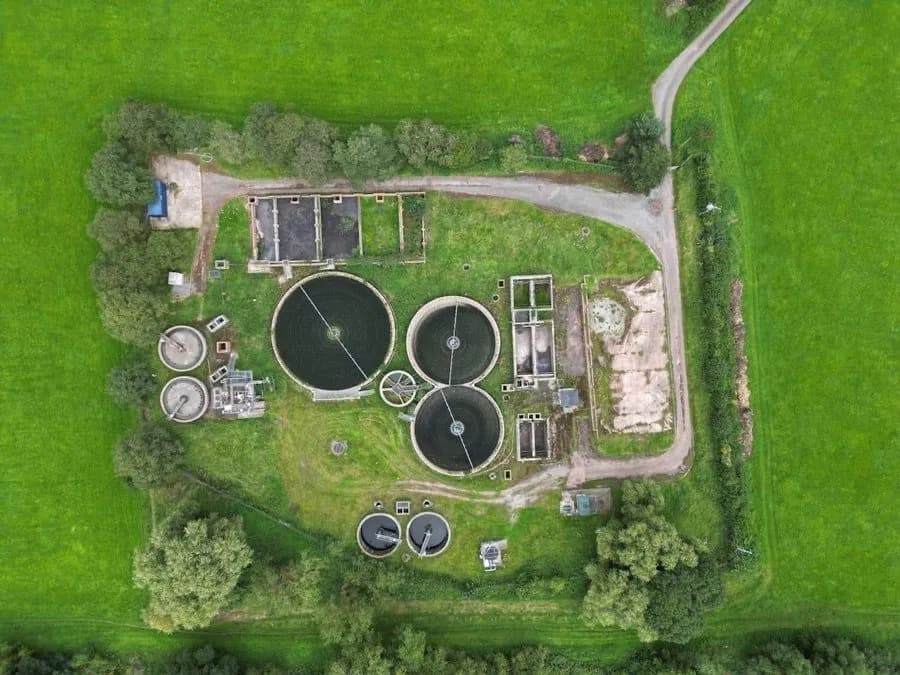
Choosing an STP Civil Contractor in India — Municipal & Industrial Guide 2026
Our Related Services
VRSIPL Services Covered in This Guide
Start Your Project
Have an Infrastructure Project?
Contact VRSIPL.
48 years of civil EPC delivery across India — WTP, STP, ETP, industrial civil, power plant, roads, and railways. Class-AA Gujarat. ISO 9001 | 14001 | 45001.