
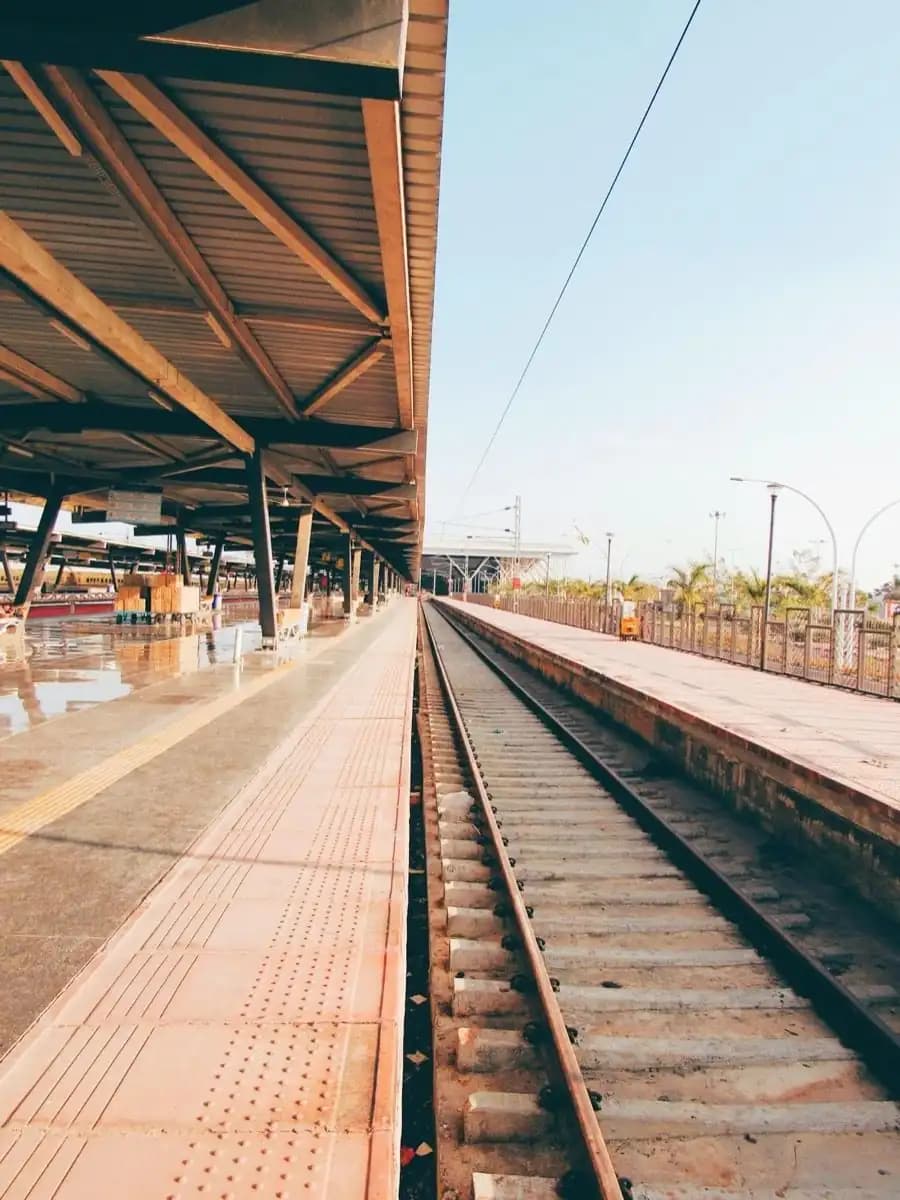
India's Metro Rail Expansion
India's metro rail network is expanding at an unprecedented pace:
- **Operational:** Delhi, Mumbai, Bangalore, Hyderabad, Chennai, Kolkata, Lucknow, Jaipur, Kochi, Nagpur, Pune, Ahmedabad, and more - **Under Construction:** 1,000+ km across 15+ cities - **Planned:** 2,000+ km in various stages of approval
Metro rail construction is among the largest urban infrastructure investments — typically ₹250–400 crore per km for elevated corridors and ₹500–800 crore per km for underground sections.
The civil works (viaduct, stations, tunnels) represent 60–70% of total project cost — making metro projects the single largest opportunity for civil EPC contractors in urban India.
VRSIPL's railway infrastructure experience and heavy civil construction capability position it for metro rail civil works — including viaduct foundations, pier construction, and station building works.
Elevated Viaduct Construction
85% of India's new metro corridors are elevated (cheaper and faster than underground). The elevated viaduct consists of:
Foundation:
Bored piles (1000–1200mm dia, 20–35m deep) in urban ground conditions. Typically 2–4 piles per pier, connected by a pile cap.
Pier:
Single or twin circular/rectangular piers (1.5–2.5m dia) rising 8–15m from ground to viaduct level. Cast using climbing formwork.
Pier Cap:
Hammer-head cap supporting the bearings. For twin-pier systems, a portal frame connects the two piers.
Superstructure — The Segmental Viaduct:
Modern metro viaducts use precast segmental construction: 1. Segments (2.5–3.5m long box sections, 50–80 tonnes each) are cast in a dedicated casting yard 2. Match-cast technology ensures perfect fit between adjacent segments 3. Transported to site on multi-axle trailers at night 4. Erected by launching gantry (span-by-span) or balanced cantilever erection 5. Post-tensioned with high-tensile strand cables 6. Grouted for corrosion protection
Typical span:
25–35m between piers. Longer spans (40–50m) used at road crossings.
Production rate:
A well-organized project produces 6–8 segments/day per casting machine and erects one span (8–12 segments) per day per launching gantry.
Metro Station Construction — Elevated and Underground
Elevated Stations:
- Reinforced concrete frame supporting platform level (typically 12–15m above ground) - Platform length: 140–180m (for 6–8 coach trains) - Station box: Concourse level (ticketing, security) + platform level + roof - Architectural finishes: granite/vitrified tile flooring, aluminium cladding, glass facades - Services: escalators (4–6 per station), lifts (2–4), ventilation, fire suppression
Underground Stations (Cut-and-Cover method):
1. Construct diaphragm walls (800–1200mm thick, 20–35m deep) as station perimeter 2. Excavate inside the diaphragm walls with strutting/anchoring 3. Cast base slab, internal columns, intermediate slabs, and roof slab (bottom-up method) 4. Or: Cast roof slab first, then excavate below it (top-down method — allows road surface restoration early) 5. Typical depth: 15–25m below road level 6. Typical station box: 250m long × 20m wide × 18m deep
Underground Stations (TBM-launched):
- Platform tunnels are larger diameter (6–8m) bored by TBM - Station caverns are mined using NATM (New Austrian Tunnelling Method) - Cross-passages connect twin running tunnels
Station construction is the most complex and slowest element — a single underground station can take 3–4 years to complete.
Track Work for Metro Rail
Metro rail track is fundamentally different from mainline railway track:
Ballastless Track (Standard for Metro):
- No ballast — track is directly fixed to a concrete slab (plinth) - Fastening system: Pandrol clips or direct fixation plates - Rail: 60 kg/m UIC 60, head-hardened for curve sections - Gauge: 1676mm (Broad Gauge) for most Indian metros - Tolerances: ±2mm alignment, ±1mm gauge — far tighter than mainline
Track Slab Construction:
- On viaduct: Cast in-situ M40 track slab (300mm thick) on the box-section deck - In tunnel: Either cast-in-situ slab or precast floating slab (on resilient pads for vibration isolation) - Third rail or OHE (Overhead Equipment) installed after track completion
Special Track work:
- Turnouts (points and crossings) at junctions and depot entries - Scissors crossovers for operational flexibility - Buffer stops at terminal stations - Derailment guards on curves
The civil contractor's role extends to track slab construction — the precision concrete platform on which the track system is installed.
Related Topics
Continue Reading
Related Articles
Railway Line Construction in India — New Lines, Doubling & Gauge Conversion
Pharma Plant Civil Construction in GIDC Gujarat — Site Development to Handover
Choosing an STP Civil Contractor in India — Municipal & Industrial Guide 2026
Our Related Services
VRSIPL Services Covered in This Guide
Start Your Project
Have an Infrastructure Project?
Contact VRSIPL.
48 years of civil EPC delivery across India — WTP, STP, ETP, industrial civil, power plant, roads, and railways. Class-AA Gujarat. ISO 9001 | 14001 | 45001.