
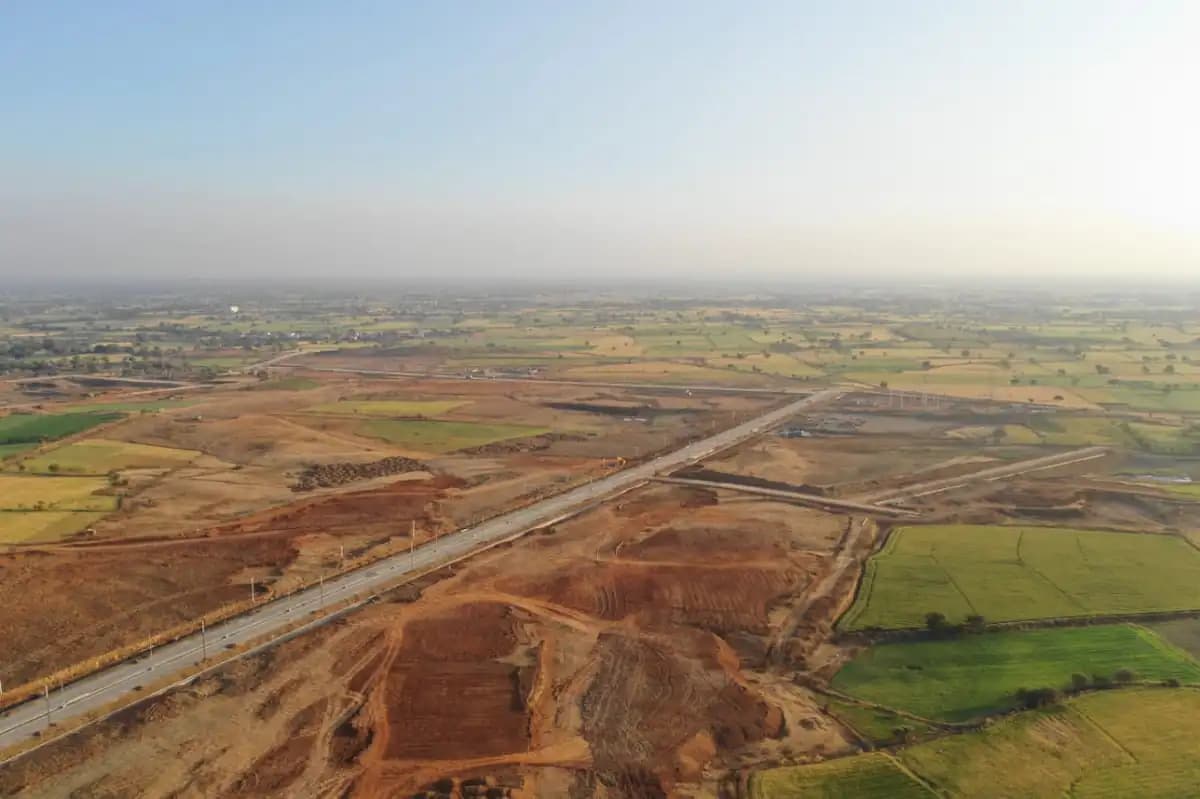
Industrial Park Development — The Infrastructure Blueprint
India's manufacturing push (Make in India, PLI schemes, National Industrial Corridor) drives massive investment in new industrial parks and upgradation of existing estates. State Industrial Development Corporations — GIDC (Gujarat), MIDC (Maharashtra), RIICO (Rajasthan), SIPCOT (Tamil Nadu), MPIDC (Madhya Pradesh), KIADB (Karnataka), TSIIC (Telangana) — are the primary developers.
A typical industrial park development of 200–500 acres involves: - Land development (cutting, filling, levelling) - Internal road network (CC/bituminous roads, 9–18m width) - Water supply system (WTP, ESR, pipeline network) - Sewerage and drainage system (storm water + industrial effluent) - Common Effluent Treatment Plant (CETP) - Electrical infrastructure (substation, HT/LT distribution, street lighting) - Boundary wall and security infrastructure - Administrative buildings, common facility centres - Landscaping and green belt
VRSIPL has executed turnkey industrial park development for GIDC (Gujarat) — delivering complete estate infrastructure from raw land to plot-ready condition.
Land Development and Grading
Raw land transformation into a flat, well-drained industrial estate is the first and largest civil activity:
Topographic Survey and Design:
- Total station survey at 10m grid to establish existing ground levels - Design grading plan to achieve: minimum 1:200 slope for drainage, balanced cut-fill, optimised road levels - Storm water drainage calculations (rational method or SCS method)
Earthwork Operations:
- Scraping topsoil (150mm) and stockpiling for green belt use - Cutting high areas and filling low areas (balanced earthwork minimises cost) - Compaction in 200mm layers to 95% Modified Proctor Density - Sub-grade preparation for road corridors (CBR ≥ 8%)
Plot Demarcation:
- Survey and marking of individual plots per approved layout plan - Plot sizes typically: 500 sq.m to 10,000 sq.m for SMEs; 1–10 acres for large industries - Corner pillars (RCC) with plot numbers and dimensions
Quantities for a 200-Acre Estate:
- Earthwork: 300,000–800,000 cubic metres - Road area: 15–20% of total estate area - Green belt: 10–15% minimum - Common facilities: 5–8% - Saleable plot area: 60–70%
VRSIPL deploys 20+ excavators, 30+ tippers, motor graders, and GPS-guided dozers for efficient mass earthwork on industrial park projects.
Road Network — The Industrial Park Backbone
The internal road network is the most visible and critical infrastructure:
Road Hierarchy:
- Main spine road: 18–24m wide (dual carriageway with central median, footpaths, services corridor) - Secondary roads: 12–15m wide (single carriageway with footpaths) - Plot access roads: 9–12m wide - Service lanes: 6–7.5m (for utility access)
Road Construction Specification (Typical GIDC/MIDC):
- Sub-grade: compacted earth to CBR ≥ 8% - Sub-base: GSB 200mm (Granular Sub-Base) - Base course: WBM 200mm or Dry Lean Concrete 150mm - Wearing course: M40 PQC 200–250mm (cement concrete roads) OR DBM 75mm + BC 40mm (bituminous) - Kerbs and channels: pre-cast concrete kerbs (IS 7242)
Road Furniture:
- Street lighting poles at 30m spacing (LED lights, 9–12m height) - Direction signage and plot number boards - Speed breakers at intersections - Truck turning circles at dead-ends - Weigh-bridge foundations at entry/exit gates
Intersection Design:
- Roundabouts at major intersections - Grade-separated entry/exit for high-traffic estates (> 500 plots) - Gate complex with security cabin, boom barrier, and CCTV foundations
VRSIPL builds CC and bituminous roads per IRC standards with concrete kerbs, storm drains, and complete road furniture for GIDC and MIDC industrial estates.
Water Supply, Sewerage and CETP
Industrial estates need dual water systems — potable and industrial — plus effluent management:
Water Supply System:
- Source: bore-wells, surface water intake, or bulk supply from state agency - Water Treatment Plant: capacity 1–5 MLD for 200-acre estate - Elevated Service Reservoir: 200–500 KL capacity (RCC Intze or circular) - Distribution network: DI/HDPE pipes, 100–300mm diameter - Fire hydrant network with ring-main system (6 bar pressure) - Individual plot connections with bulk meters
Sewerage System (Domestic):
- Underground drainage network: RCC NP3 pipes, 200–600mm - Manholes at every junction and 30m intervals - Sewage Treatment Plant (STP): MBBR or SBR, capacity 0.5–2 MLD - Treated water reuse for green belt irrigation
Industrial Effluent System:
- Separate effluent sewer network (HDPE/PP pipes, chemical-resistant) - Industrial plots discharge pre-treated effluent to common sewer - Common Effluent Treatment Plant (CETP): - Capacity: 2–10 MLD depending on estate size and industry type - Treatment: primary (screen, EQ, coagulation) → secondary (activated sludge/MBBR) → tertiary (sand filter, activated carbon, UF/RO) - ZLD (Zero Liquid Discharge) systems for chemical and pharma estates - Solar evaporation ponds for reject concentrate
VRSIPL has built CETPs and ZLD systems for GIDC estates in Gujarat's Ankleshwar-Bharuch chemical belt — India's most stringent effluent compliance zone.
Electrical Infrastructure and Substations
Reliable power supply is a make-or-break factor for industrial estate occupancy:
Substation Construction:
- 66/11kV or 132/33kV receiving substation (depending on estate load) - Transformer foundations (RCC, oil containment pit, fire wall) - Control room building (RCC framed, relay room, battery room) - HT switchgear room - Earth mat installation
HT Distribution Network:
- 11kV or 33kV underground cable network (XLPE cables in cable trenches) - Ring Main Units (RMU) at cluster centres - Individual plot HT connection chambers - Cable trench network: RCC covered trenches along road corridors
LT Distribution:
- 11kV/415V distribution transformers at strategic locations - LT cable network for street lighting, common facilities, and small plots - Metering panels and bill collection infrastructure
Street Lighting:
- LED street lights (60–150W) on 9–12m GI/MS poles - Solar-powered street lights for green estates - Timer/dimmer controllers for energy efficiency - SCADA-connected smart lighting for premium estates
Backup Power:
- DG set foundations and acoustic enclosure civil works - Fuel storage tank foundations - Synchronisation panel room
VRSIPL executes complete electrical infrastructure civil works — from 132kV substation buildings to the last cable trench — for industrial park developers.
FAQ — Industrial Park Development
Q: How much does it cost to develop a 200-acre industrial park in India?
Typically ₹100–250 crore for complete development including roads, water, sewerage, CETP, substation, and buildings. Cost varies by state (land rates, soil conditions) and specification level (basic GIDC vs. premium integrated township).
Q: How long does industrial park development take?
18–30 months for a 200-acre estate from land handover to plot-allotment ready. Roads and drainage: 8–12 months; water supply and CETP: 10–14 months; substation: 12–16 months (equipment procurement is the critical path).
Q: What is the difference between GIDC, MIDC, RIICO, and SIPCOT estates?
These are state-specific industrial development corporations — GIDC (Gujarat), MIDC (Maharashtra), RIICO (Rajasthan), SIPCOT (Tamil Nadu). They acquire land, develop infrastructure, and allot plots to industries. Construction specifications are similar but procurement processes and allotment policies differ.
Q: What is a CETP and why is it needed?
A Common Effluent Treatment Plant treats combined industrial effluent from all factories in an estate. It's mandatory under CPCB/SPCB norms for estates with polluting industries. Individual factories pre-treat to inlet standards, then discharge to the common CETP for final treatment to river-discharge or ZLD standards.
Q: Can one contractor handle the entire industrial park development?
Yes — turnkey EPC contractors like VRSIPL handle all civil works (earthwork, roads, drainage, water supply, CETP, substation civil, buildings) under a single contract. This ensures coordinated execution, faster delivery, and single-point responsibility.
Related Topics
Continue Reading
Related Articles
Pharma Plant Civil Construction in GIDC Gujarat — Site Development to Handover
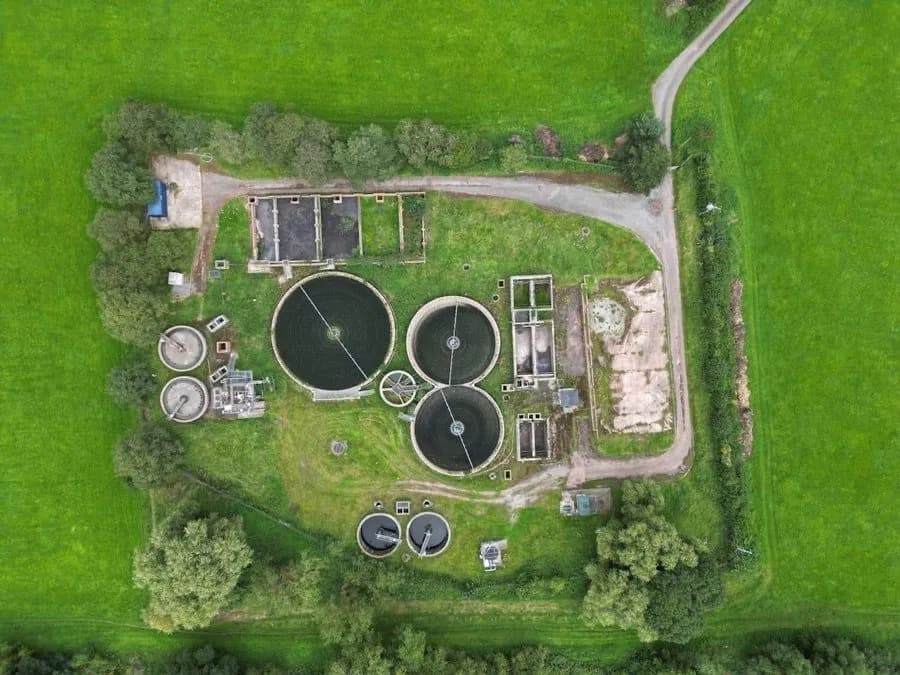
Choosing an STP Civil Contractor in India — Municipal & Industrial Guide 2026
ETP and ZLD Civil Works for Chemical Industries in GIDC — Complete Guide
Our Related Services
VRSIPL Services Covered in This Guide
Start Your Project
Have an Infrastructure Project?
Contact VRSIPL.
48 years of civil EPC delivery across India — WTP, STP, ETP, industrial civil, power plant, roads, and railways. Class-AA Gujarat. ISO 9001 | 14001 | 45001.