
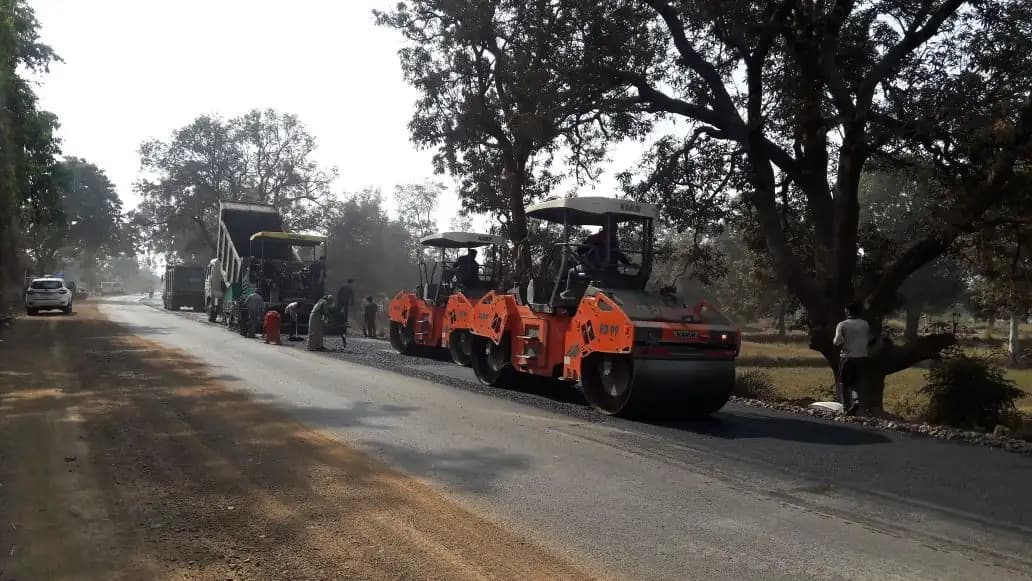
EPC — The Three Letters Explained
E — Engineering (Design):
The EPC contractor handles all design work — structural design, hydraulic design, pavement design, electrical design, and producing construction drawings. The client provides only the broad scope and performance requirements.
P — Procurement:
The contractor procures all materials — cement, steel, aggregates, pipes, valves, electrical equipment, mechanical equipment — and manages the supply chain. This gives the contractor flexibility to optimise costs through bulk purchasing and alternative sourcing.
C — Construction:
The contractor executes all physical construction work — civil works, mechanical installation, electrical installation, testing, and commissioning. The project is handed over to the client as a 'ready to use' facility.
The key differentiator:
In EPC, the contractor takes single-point responsibility for the entire project outcome. If the design is wrong, the contractor fixes it at own cost. If materials are delayed, the contractor manages it. If construction quality fails, the contractor repairs it. The client's role is primarily monitoring and approval at milestones.
VRSIPL operates as a full EPC contractor for infrastructure projects — roads, water supply, railways, irrigation, and buildings — managing engineering, procurement, and construction under a single umbrella.
How EPC Works in Indian Infrastructure
The Typical EPC Process:
1. **Client Issues Tender:** Based on a conceptual design or DPR (Detailed Project Report). The tender specifies performance requirements, not detailed designs.
2. **Contractor Bids:** Submits technical methodology + total lump-sum price for delivering the complete project.
3. **Contract Award:** Lowest technically qualified bidder wins. Signs EPC contract with fixed price and fixed timeline.
4. **Engineering Phase (Month 1–6):** - Contractor's design team develops detailed engineering - Client reviews and approves critical designs - Enables early procurement of long-lead items
5. **Procurement Phase (Month 3–12):** - Materials ordered, delivered to site - Overlaps with engineering — this overlap is EPC's speed advantage
6. **Construction Phase (Month 4–30):** - Physical construction begins as soon as first designs and materials are ready - Milestone-based payments (e.g., 10% on foundation, 20% on superstructure, etc.)
7. **Testing & Commissioning:** - Contractor demonstrates the facility meets performance standards - Defect liability period begins (12–24 months)
Payment:
The total contract price is fixed. Payments are made against milestones — no measurement of individual quantities. This eliminates billing disputes and gives the client cost certainty.
Why EPC Dominates Indian Infrastructure Today
Advantages for the Client (Government/Owner):
- Single point of responsibility (no finger-pointing between designer and contractor) - Fixed cost known upfront — no cost overruns from quantity variations - Faster delivery (design-procurement-construction overlap) - Less client supervision needed (contractor manages everything) - Performance guarantee — if the road fails in 5 years, the EPC contractor is responsible
Advantages for the Contractor:
- Design freedom to optimise (use less material if engineering allows, saving cost) - Control over procurement (choose quality vs. premium sources based on experience) - Higher margins possible through innovation and efficiency - Larger project sizes (EPC typically > ₹50 crore, vs. item-rate works < ₹20 crore)
Who Uses EPC in India:
- NHAI (all highway projects since 2015) - RVNL (majority of railway projects) - Smart Cities (urban infrastructure) - State water supply departments (bulk water schemes) - Power sector (thermal, solar, wind) - Oil & gas (refineries, pipelines)
VRSIPL as an EPC Contractor:
With 48 years of execution experience, VRSIPL brings: - In-house engineering teams for design optimisation - Established material supply chains across Gujarat, MP, Rajasthan, and Maharashtra - Own construction fleet (excavators, batching plants, pavers, rollers) - Proven project management delivering ₹50–500 crore projects on time
The EPC model rewards experienced contractors who can manage complexity — and that's exactly what 48 years of practice delivers.
Related Topics
Continue Reading
Related Articles
EPC Contract vs Item Rate Contract in India — Which is Better for Infrastructure?
How to Bid for Government Infrastructure Tenders in India — Complete Guide
Pharma Plant Civil Construction in GIDC Gujarat — Site Development to Handover
Our Related Services
VRSIPL Services Covered in This Guide
Start Your Project
Have an Infrastructure Project?
Contact VRSIPL.
48 years of civil EPC delivery across India — WTP, STP, ETP, industrial civil, power plant, roads, and railways. Class-AA Gujarat. ISO 9001 | 14001 | 45001.