
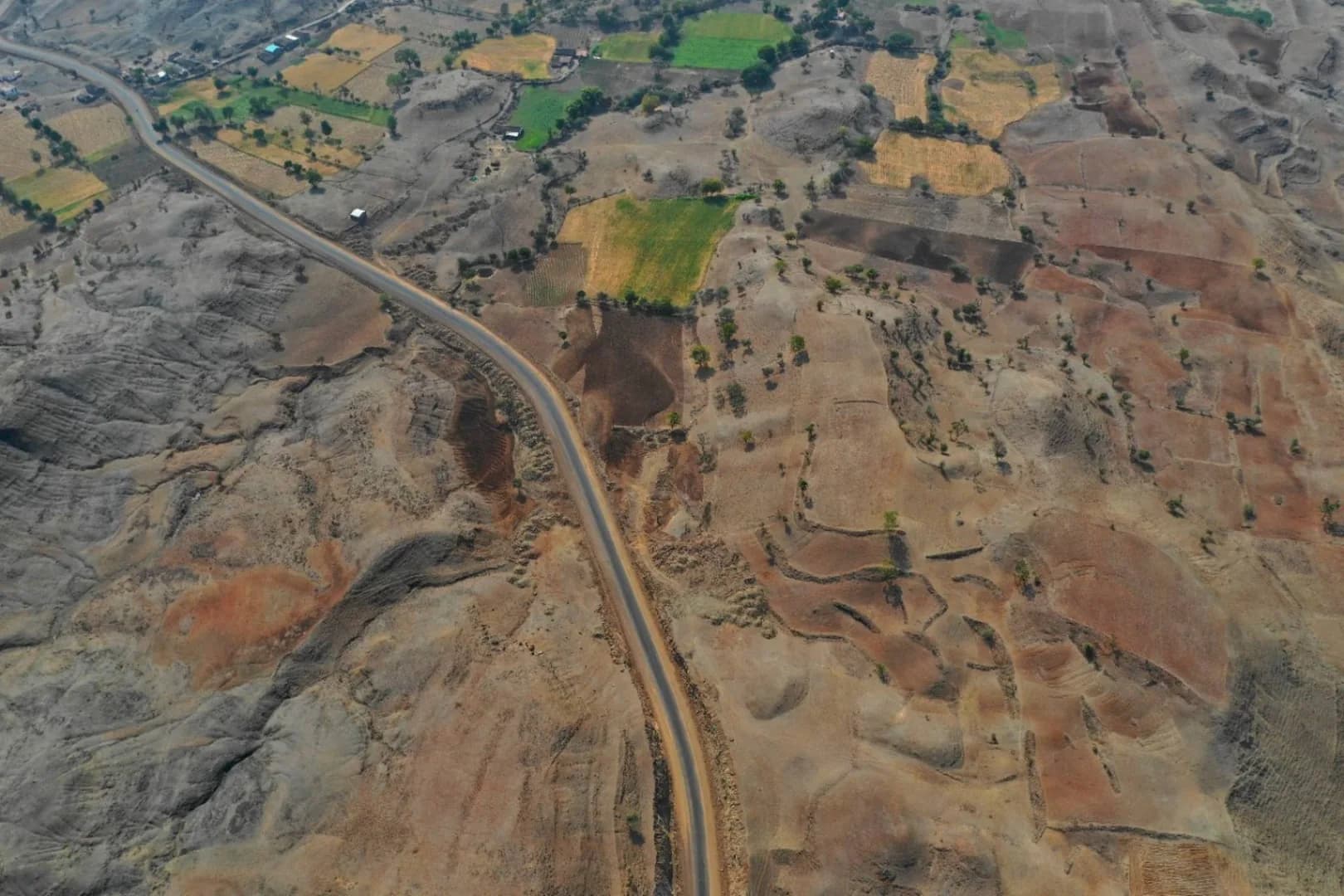
Contract Models in Indian Infrastructure
Indian government infrastructure projects use these primary contract models:
1. Item Rate Contract (most common for PWD/state projects):
The tender specifies quantities for each work item (e.g., 10,000 cum earthwork, 5,000 sq.m plastering). Contractors quote rates per unit for each item. Payment is based on actual measured quantities × quoted rate. The owner bears the quantity risk.
2. EPC / Lump Sum Contract (NHAI, RVNL, large projects):
The contractor quotes a total fixed price for the complete scope — design, procurement, and construction. Payment is milestone-based (e.g., 10% on foundation completion, 15% on superstructure, etc.). The contractor bears both price and quantity risk.
3. Percentage Rate Contract:
Similar to item rate but the contractor quotes a single percentage above or below the estimated rates (schedule of rates). Simpler tendering process.
4. HAM (Hybrid Annuity Model — for highways):
Government pays 40% during construction (EPC-style) + 60% as annuity payments over 15 years. Contractor arranges partial financing.
5. BOT (Build-Operate-Transfer):
Contractor builds at own cost, collects toll/user charges for 15–25 years, then transfers back to government. Highest risk, highest potential return.
6. Design-Build (DB):
Contractor designs and builds for a lump sum — but without the 'E' (engineering) and 'P' (procurement) of full EPC. Common for specific structures (bridges, buildings).
EPC vs Item Rate — Detailed Comparison
Risk Allocation:
- EPC: Contractor bears quantity risk, design risk, and construction risk. Owner has cost certainty. - Item Rate: Owner bears quantity risk (if actual quantities exceed estimate, cost increases). Contractor bears only rate/productivity risk.
Payment Mechanism:
- EPC: Milestone-based lump sum. No measurement disputes. Faster billing. - Item Rate: Payment per measured quantity. Detailed measurement books (MB) required. Measurement disputes common.
Design Responsibility:
- EPC: Contractor designs (or engages designers). Flexibility to optimise design for cost. - Item Rate: Owner provides complete design. Contractor builds exactly as drawn. No design innovation.
Cost Certainty:
- EPC: Owner knows total cost at contract award (±0%). No cost overruns unless scope changes. - Item Rate: Final cost known only at completion. Typical variation: +10% to +30% over estimated cost due to quantity variations.
Timeline:
- EPC: Contractor controls timeline (design + construction overlap). Typically 20–30% faster. - Item Rate: Sequential design → tender → construction. Longer overall duration.
Quality:
- EPC: Risk of contractor cutting corners to save cost within lump sum. Needs strong supervision. - Item Rate: Less incentive to cut corners (paid for actual quantities). But less incentive for innovation.
Project Size:
- EPC: Economical for projects > ₹50 crore. Overhead of detailed risk pricing not justified for small works. - Item Rate: Works for any size. Standard for routine PWD works < ₹50 crore.
Which Model is Best? VRSIPL's Perspective
Having executed both EPC and item-rate contracts for 48 years, VRSIPL's view:
Choose EPC when:
- Project is large (> ₹100 crore) with clear scope - Timeline is critical (EPC allows design-construction overlap) - Owner wants cost certainty without measurement hassles - The contractor has design capability and experience for optimisation - Examples: NHAI highways, RVNL railway lines, large water supply schemes
Choose Item Rate when:
- Project involves significant underground/unknown conditions (utilities, rock, etc.) - Design is complex and best done by specialist consultants (not contractor) - Owner wants flexibility to modify scope during construction - Project value is moderate (< ₹50 crore) - Examples: Municipal road repairs, building renovations, drainage works
The trend:
India is moving towards EPC for large infrastructure. NHAI exclusively uses EPC/HAM. RVNL is shifting to EPC. Smart Cities use EPC/design-build. State PWDs still use item rate for routine works but are adopting EPC for flagship projects.
VRSIPL is equally comfortable with both models — our estimation department prices EPC risks accurately (ensuring profitability without inflated contingencies), and our measurement teams maintain precise records for item-rate works.
Related Topics
Continue Reading
Related Articles
How to Bid for Government Infrastructure Tenders in India — Complete Guide
What is EPC in Construction? — Engineering, Procurement & Construction Explained
Pharma Plant Civil Construction in GIDC Gujarat — Site Development to Handover
Start Your Project
Have an Infrastructure Project?
Contact VRSIPL.
48 years of civil EPC delivery across India — WTP, STP, ETP, industrial civil, power plant, roads, and railways. Class-AA Gujarat. ISO 9001 | 14001 | 45001.