
Civil Infrastructure Scope in Utility-Scale Solar Parks
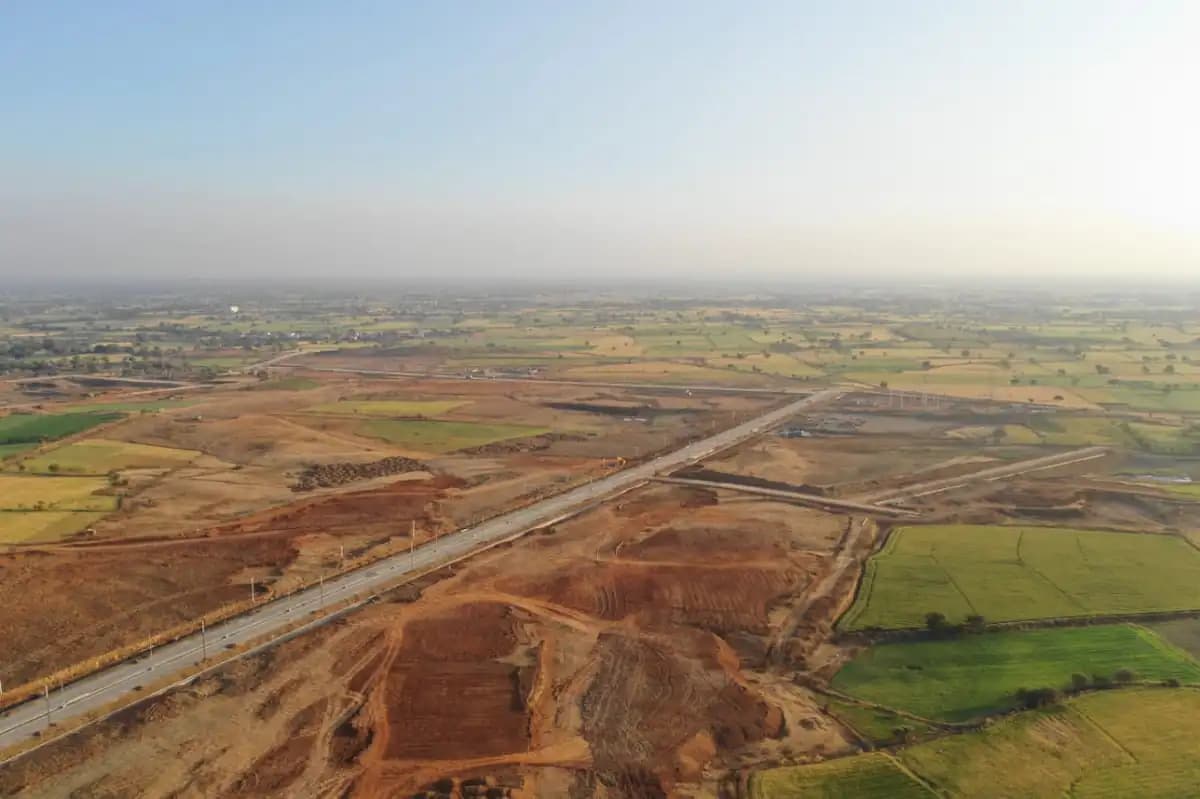
A utility-scale solar park (50 MW to 1,000+ MW) is far more than photovoltaic modules on open land. The civil construction scope typically represents 15–25% of the total project cost and determines the structural integrity, drainage performance, and 25-year operational life of the installation.
The civil scope at a solar park includes: module mounting structure (MMS) foundations, inverter and transformer pads, substation building civil works, switchyard structures, control room buildings, internal road network, perimeter fencing, cable trench network, drainage systems, and balance-of-plant civil works.
India's solar parks — Bhadla (Rajasthan, 2,245 MW), Pavagada (Karnataka, 2,050 MW), Rewa Ultra Mega (MP, 750 MW), and Dholera (Gujarat, 5,000 MW planned) — demand contractors who understand both structural engineering and the unique challenges of desert/arid execution.
Module Mounting Structure (MMS) Foundations
The MMS foundation is the single largest civil quantity item in a solar park. For a 100 MW park, this translates to 250,000–400,000 individual foundation elements.
Foundation Types Used in India:
Driven Pile Foundations (most common):
Hot-rolled or cold-formed steel C/Z-sections (ISMC 75–150 or equivalent) driven 1.5–2.5 metres into the ground using pile-driving machines. Suitable for most soil types with SPT N-value > 10. A single pile-driving rig can install 150–300 piles per day.
Rammed Earth/Concrete Foundations:
Used where soil is too soft or rocky for driven piles. Involves drilling 300–450mm dia holes, inserting steel posts, and backfilling with M15/M20 concrete. Used in black cotton soil regions of Karnataka, Maharashtra, and Telangana.
Ballasted Foundations:
Pre-cast concrete blocks (300–500 kg each) used where ground disturbance must be minimised or where the site has high water table. Common in canal-top solar installations.
Screw Pile Foundations:
Helical steel piles screwed into the ground — gaining popularity for their speed (200–400 per day per machine) and pull-out resistance in sandy soils (Rajasthan desert regions).
Quality Parameters:
- Verticality tolerance: ±1° from vertical - Height tolerance: ±5mm from design level - Pull-out resistance: minimum 2.5x design wind load (tested per IS 2911) - Torque correlation: installed torque vs. pull-out capacity validated through extraction tests
VRSIPL has installed 500,000+ pile foundations across solar parks in Rajasthan and Gujarat — maintaining daily installation rates of 1,500–2,000 piles across multiple rigs.
Substation Civil Works — 33kV to 220kV
Every solar park requires a pooling substation (33/132/220 kV) to step up generated power for grid evacuation. The substation civil scope includes:
Equipment Foundations:
- Power transformer foundations (M30 concrete, 1.5–3m deep depending on transformer rating) - Circuit breaker foundations (SF6 breakers: 132/220 kV class) - Current transformer and potential transformer pedestals - Isolator foundations and earth switch pedestals - Lightning arrestor foundations - Bus-bar support structures (tubular steel columns on RCC pedestals)
Control Room Building:
- RCC framed structure (G+1 typically) - SCADA room, relay room, battery room, cable basement - HVAC provisions, false flooring, fire protection - Designed to IS 1893 (seismic) and IS 875 (wind) standards
Switchyard Area:
- Levelling and grading to ±50mm tolerance - Crushed stone metal spreading (150–200mm) for equipment movement - Oil containment pits below transformers (capacity: 110% of transformer oil volume) - Earth mat installation (copper conductor grid at 600mm depth) - Cable trenches connecting all equipment bays
Fire Protection:
- Transformer fire walls (RCC/brick, 3–4m height) - Oil drainage channels with oil-water separator - Sprinkler foundations and pipe supports
VRSIPL executes 33kV to 220kV substation civil works — from site grading through equipment foundation handover — for solar parks and conventional power evacuation systems.
Internal Roads, Cable Trenches & Drainage
Internal Road Network:
Solar parks require 8–12 km of internal roads per 100 MW for construction access, O&M vehicles, and module cleaning machines. Road construction typically involves: - Main access road: 5.5–7m wide, WBM base (200mm) + gravel surface or bituminous surface - Array access roads: 3.5–4m wide, compacted gravel or stabilised earth - Turning radii designed for 12m trailer (module transport during construction) - Culverts at every drainage crossing point
Cable Trench Network:
Underground cable trenches connect string combiner boxes → inverters → transformers → substation. A 100 MW park may need 30–50 km of cable trenches: - DC cable trenches: 600mm wide × 750mm deep (sand-bedded) - HT cable trenches: 900mm wide × 1000mm deep - Cable trench to substation: 1200mm wide × 1200mm deep (multi-layer) - Sand bedding (100mm), cable laying, sand protection (100mm), warning tape, backfill - Route markers at every 50m and direction change
Drainage System:
Solar parks are typically on flat terrain prone to waterlogging. The drainage design includes: - Perimeter drainage channels (trapezoidal, 600–1200mm depth) - Cross-drainage culverts under internal roads - Retention ponds for zero-discharge compliance - Slope grading (minimum 1:500) to prevent standing water near foundations
Poor drainage destroys solar park foundations within 5–7 years. VRSIPL's civil engineering ensures 25-year structural life through proper grading and drainage design.
Canal-Top Solar — A Unique Indian Innovation
Gujarat pioneered canal-top solar installations on the Narmada Canal network. Civil construction for canal-top solar involves:
Support Structure Foundations:
- Steel or RCC columns on the canal banks or within the canal bed - Foundations designed for canal-full and canal-empty conditions (differential water pressure) - Vibration isolation from water flow turbulence
Walkway and Maintenance Platforms:
- MS walkways with gratings for panel access - Handrails and safety nets over open canal sections - Access ladders at 50m intervals
Cable Routing:
- Cable trays along canal banks (protected from water splash) - Underwater cable crossings at canal diversion points - Weatherproof junction boxes at elevated positions
Unique Challenges:
- Construction above flowing water (safety and logistics) - Foundation design for scour and canal maintenance dewatering - Access limitations during monsoon (canal at full supply level) - Coordination with irrigation department for shutdown windows
VRSIPL has executed canal-top solar civil works on Gujarat's canal network — combining structural engineering with irrigation infrastructure experience.
BESS (Battery Energy Storage) Civil Infrastructure
With India's 2030 target of 500 GW RE capacity, Battery Energy Storage Systems (BESS) are becoming integral to solar parks. Civil construction for BESS includes:
Container Pad Foundations:
- Level RCC pads (M25) for battery containers (standard 40-ft or 20-ft ISO containers) - Load-bearing capacity: 15–25 tonnes per container - Fire-separation distance: minimum 3m between containers (NFPA 855) - Cable entry pits below each container
Inverter and Transformer Foundations:
- Power conversion system (PCS) inverter pads - Step-up transformer foundations with oil containment - Aux transformer and MV switchgear room
Fire Safety Infrastructure:
- Fire water tank (capacity per NFPA 855 — typically 100,000–200,000 litres) - Fire pump house and pipe network - Deluge system support structures - Fire-rated walls between battery banks
HVAC and Utility Buildings:
- HVAC plant room for battery thermal management - Cooling tower foundations (if liquid-cooled BESS) - Control room, security room, O&M building
BESS civil infrastructure is an emerging scope area as India plans 4,000 MWh of battery storage by 2027. VRSIPL combines solar park civil experience with industrial plant construction capabilities for integrated RE+BESS projects.
FAQ — Solar Park Civil Construction
Q: How much land does a 100 MW solar park need?
Approximately 400–500 acres (160–200 hectares) for ground-mounted fixed-tilt systems. Single-axis tracker systems need 10–15% more land due to wider row spacing.
Q: What is the civil construction cost per MW for a solar park?
Civil works (excluding modules, inverters, electrical) typically cost ₹30–50 lakh per MW, depending on terrain, soil conditions, and substation voltage level.
Q: How long does civil construction take for a 100 MW solar park?
Typically 6–8 months from site possession to civil completion handover, enabling module mounting to follow immediately.
Q: What soil tests are needed before solar park construction?
Geotechnical investigation including SPT (Standard Penetration Test) at 100m grid, laboratory classification (IS 1498), and corrosivity testing for pile foundation design.
Q: Can solar parks be built on agricultural land?
Non-agricultural land (wasteland, barren, scrub) is preferred under MNRE guidelines. Some states allow solar on agricultural land with conversion. Agri-voltaic (elevated modules allowing farming below) is gaining policy support.
Related Topics
Continue Reading
Related Articles
Pharma Plant Civil Construction in GIDC Gujarat — Site Development to Handover
Choosing an STP Civil Contractor in India — Municipal & Industrial Guide 2026
ETP and ZLD Civil Works for Chemical Industries in GIDC — Complete Guide
Our Related Services
VRSIPL Services Covered in This Guide
Start Your Project
Have an Infrastructure Project?
Contact VRSIPL.
48 years of civil EPC delivery across India — WTP, STP, ETP, industrial civil, power plant, roads, and railways. Class-AA Gujarat. ISO 9001 | 14001 | 45001.