
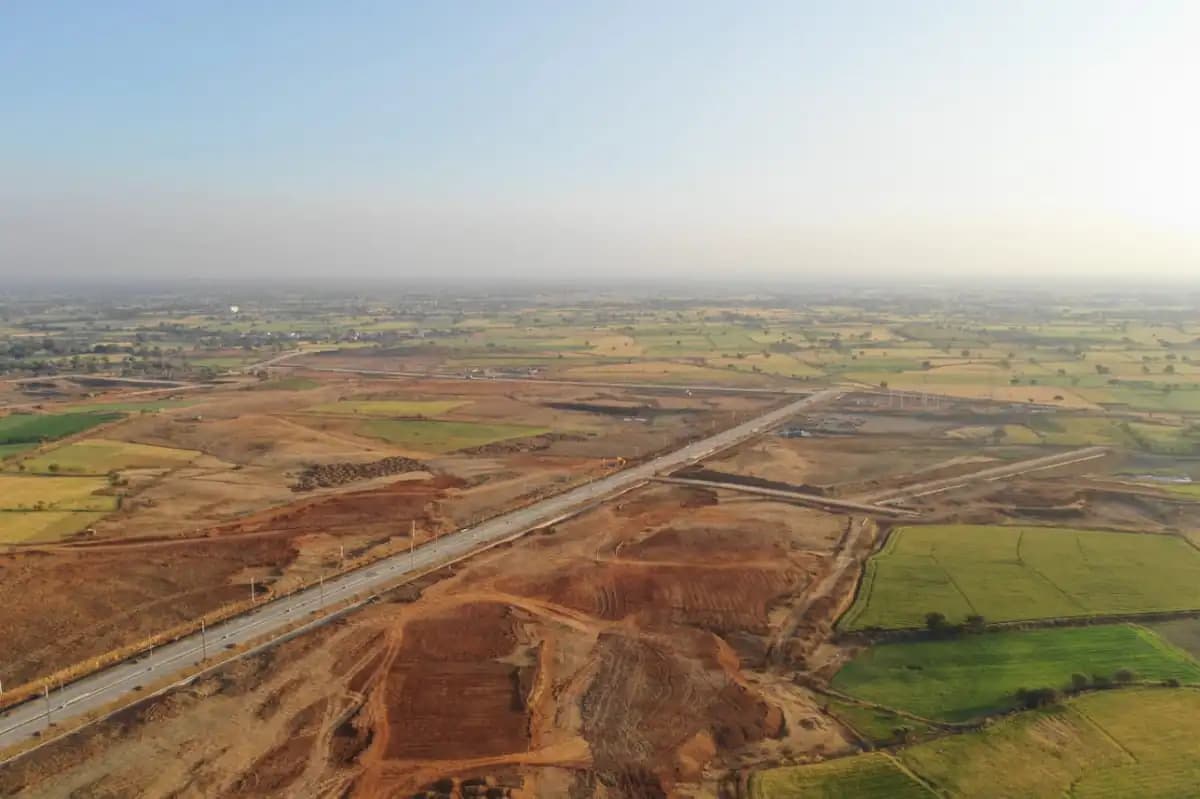
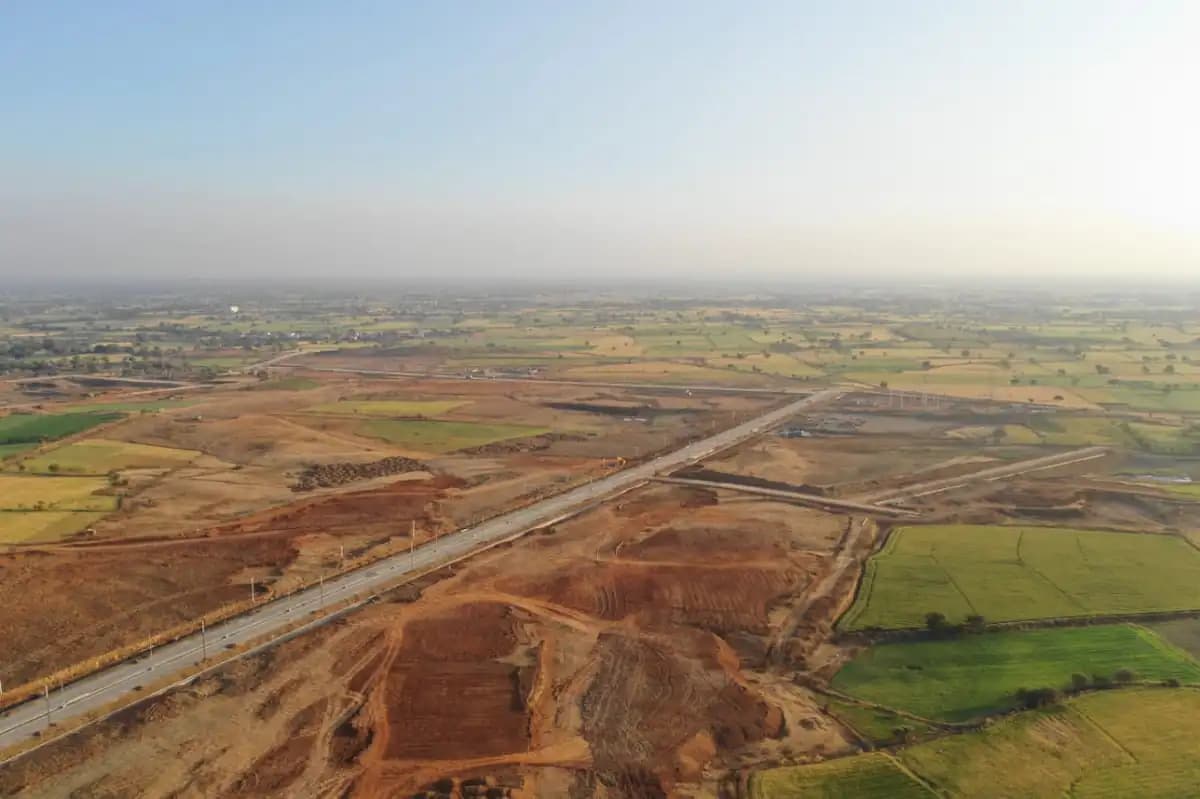
Pipeline Construction in India — Scope and Scale
India's petroleum and natural gas pipeline network is expanding rapidly to connect LNG terminals, refineries, city gas distribution networks, and petrochemical plants. Key pipeline operators include GAIL, IOCL, HPCL, BPCL, GSPL (Gujarat State Petronet), ONGC, and private CGD companies.
Pipeline construction is categorised by: - **Product:** Crude oil, petroleum products (MS/HSD/ATF), natural gas, LPG, or water - **Diameter:** Small-bore (4"–12") for distribution, medium (16"–24") for trunk lines, large (30"–48") for main transmission - **Pressure:** Low (< 7 kg/cm²) for distribution, medium (7–30 kg/cm²), high (30–100 kg/cm²) for cross-country gas transmission - **Material:** Carbon steel (API 5L Grade B to X70), HDPE (for CGD last-mile), or GRE/GRP for corrosive service
The civil and mechanical construction scope includes: Right of Way (ROW) preparation, trenching, pipe stringing, welding, coating inspection, lowering, backfilling, hydrotesting, and reinstatement. VRSIPL executes pipeline civil and mechanical works for ONGC, GSPL, GAIL, and private oil & gas companies across Gujarat, Rajasthan, and MP.
Phase 1: Right of Way and Route Survey
Pipeline ROW (Right of Way) preparation is the critical first phase:
Route Survey:
- DGPS survey of the pipeline route corridor (typically 18–20m wide for 12"+ pipelines) - Identification of crossings: roads, railways, rivers, canals, utilities, forests - Geotechnical bore holes at crossing locations and every 500m along route - Environmental clearance under EIA notification for forest/wetland areas
Land Acquisition:
- Temporary ROW (construction period): 18–20m width - Permanent ROW (operational easement): 3–6m around buried pipe - Compensation to landowners per state land acquisition norms - Police/district coordination for entry permissions
ROW Preparation:
- Clearing vegetation and topsoil stripping (150–300mm) - Topsoil stockpiling for reinstatement after construction - Temporary culverts and access roads for pipe transport - Fencing of working strip through agricultural land
Unique Indian Challenges:
- Multiple land parcels (Indian agricultural holdings average 1–2 acres) - Crop compensation disputes - Forest clearance delays (MOEFCC Stage-I and Stage-II) - Monsoon restrictions (July–September: no pipeline construction in most states) - Railway and NH crossing permissions (6–12 months advance application)
Phase 2: Trenching and Pipe Stringing
Trenching:
The pipeline trench is the backbone of cross-country pipeline construction: - Trench width: pipe diameter + 300–600mm (e.g., 24" pipe = 1200mm trench) - Trench depth: minimum 1.2m cover in normal terrain, 1.5m under agricultural land, 2.0m at road crossings - Rock trenching: hydraulic breakers or controlled blasting for hard rock sections - Soft soil trenching: sheet piling or trench boxes for unstable soils - Dewatering: well-point or sump-pump systems for high water table areas
Trench excavation rate: 500–1,500 metres/day depending on soil type and pipe diameter. VRSIPL deploys PC200–PC300 class excavators with bucket widths matched to trench specifications.
Pipe Stringing:
- Unloading pipe joints (12m standard) from trailers onto the ROW using sidebooms - Stringing pipes end-to-end along the trench line - Pipe supports (sandbags or timber) to prevent ground contact damage - Joint identification and tracking (QR codes, paint markings)
Bending:
- Field cold-bending using hydraulic pipe benders for vertical and horizontal curves - Maximum bend: 1.5° per pipe diameter length (e.g., 24" pipe: max 3° per 12m joint) - Elastic bending for gradual contour changes
Phase 3: Welding, Coating and Lowering
Pipeline Welding:
- Manual welding: SMAW (Shielded Metal Arc Welding) using cellulosic and low-hydrogen electrodes - Semi-automatic: FCAW (Flux-Cored Arc Welding) for higher productivity on large-diameter pipes - Automatic: orbital welding machines for 24"+ diameter pipelines - Weld procedure qualification per ASME Section IX and API 1104 - Welder qualification: 6G position, destructive testing (nick-break, macro, bend tests) - NDT (Non-Destructive Testing): 100% radiography for sour-service and > 30" pipes, 10% for sweet-service
Joint Coating:
- Field joint coating using heat-shrink sleeves (HSS) or liquid epoxy - Holiday detection (jeep testing) at 25 kV/mm to verify coating integrity - Purpose: prevent corrosion at weld joints where factory coating is removed
Lowering:
- Multiple sidebooms (pipelayers) lift the welded and coated pipeline string - Coordinated lowering into the trench maintaining minimum bend radius - Pipe rest on sand padding (150mm bed) in rocky or sharp-stone soil - Typical lowering spread: 3–5 sidebooms for 24" pipe
Backfilling:
- Initial backfill: 300mm of selected fine soil (no stones > 50mm) - Main backfill: excavated soil in 200mm layers, mechanically compacted - Warning tape at 300mm above pipe crown - Surplus earth crowned over trench (5–10% settlement allowance)
VRSIPL's pipeline teams maintain welding production rates of 25–40 joints/day on 12"–24" pipelines with < 2% repair rate.
Special Crossings — HDD, River, Railway and Road
Pipeline crossings are the most technically demanding and expensive sections:
Horizontal Directional Drilling (HDD):
- Used for river, highway, railway, and environmentally sensitive crossings - Pilot bore drilled using steerable drill bit with real-time tracking (gyroscope/wire-line) - Hole enlargement (reaming) to 1.5x pipe diameter - Pre-fabricated pipe string pulled through the bored hole - Typical HDD lengths: 200–1500m; maximum achieved in India: 3,500m+ - VRSIPL has executed HDD crossings up to 800m under rivers and national highways
Open-Cut River Crossings:
- For seasonal streams and small rivers - Coffer-dam construction, dewatering, trenching in riverbed - Concrete weight coating or saddle weights for negative buoyancy - Construction restricted to dry season (October–May)
Railway Crossings:
- Cased crossing (steel casing pipe, typically 2x carrier pipe diameter) - Open-cut during traffic block (4–6 hour possession) or HDD/auger bore - Railway Board approval mandatory — 6–12 months lead time - Casing sealed with end-seals and vent pipes
Road Crossings:
- NHAI/state highway: trenchless (HDD or auger bore) preferred - District roads: open-cut with temporary diversion - Concrete encasement for pipe protection under heavy-traffic roads - Road reinstatement per IRC standards (full pavement reconstruction)
Tank Farm and Compressor Station Civil Works
Pipeline infrastructure includes terminal facilities — tank farms, compressor stations, and metering stations. VRSIPL executes the civil construction scope:
Tank Farm Civil:
- Foundation ring-walls for storage tanks (5,000–65,000 KL capacity) - Ring-wall: RCC (M30), typically 900mm wide × 1200mm deep - Tank pad preparation: compacted sand fill within ring-wall to 95% relative density - Dyke walls (earthen bund or RCC wall, capacity: 110% of largest tank) - Pipe rack foundations, manifold area paving, fire water tank foundations - Control room, pump house, metering skid foundations
Compressor Station Civil:
- Gas compressor foundations (vibration-isolated, spring-mounted) - Foundation analysis: dynamic analysis per IS 2974 for reciprocating compressors - Turbine hall or compressor shelter (PEB or RCC framed) - Air cooler foundations, scrubber/separator foundations - Control building, MCC room, instrument room
Pig Launcher/Receiver Stations:
- RCC foundations for barrel assembly - Approach paving for pig handling equipment - Isolation valve foundations and actuator pedestals - Fencing, lighting, and SCADA building
VRSIPL has executed tank farm civil works for ONGC, GSPC, and private petroleum companies — including ring-wall foundations, dyke construction, and complete terminal infrastructure.
FAQ — Oil & Gas Pipeline Construction
Q: How deep is a gas pipeline buried in India?
Minimum 1.2m cover in normal terrain, 1.5m under agricultural land, 2.0m at road crossings, and 3.0m+ at railway crossings (inside casing pipe). PNGRB regulations specify minimum depth based on pipeline class location.
Q: How much does pipeline construction cost per km in India?
Typically ₹1.5–3 crore/km for 12"–16" gas pipelines and ₹3–8 crore/km for 24"–36" cross-country trunk lines (including material, welding, coating, and civil works). HDD crossings add ₹50 lakh–₹5 crore per crossing.
Q: How long does it take to build 100 km of pipeline?
Typically 12–18 months for a 100 km cross-country gas pipeline, including ROW, crossings, and commissioning. Linear construction rate: 1–3 km/day for pipe laying spread.
Q: What is HDD and when is it used?
Horizontal Directional Drilling is a trenchless method where a pilot bore is drilled underground, enlarged, and the pipeline pulled through — avoiding surface disruption. Used for rivers, highways, railways, forests, and urban areas.
Q: What are the major pipeline projects in India right now?
Jagdishpur-Haldia-Bokaro-Dhamra (JHBDPL, 2,655 km), Kochi-Mangalore LPG pipeline, GSPL expansion in Gujarat, Indradhanush Gas Grid (northeast India), and multiple CGD networks across 295+ Geographical Areas.
Related Topics
Continue Reading
Related Articles
Pharma Plant Civil Construction in GIDC Gujarat — Site Development to Handover
Choosing an STP Civil Contractor in India — Municipal & Industrial Guide 2026
ETP and ZLD Civil Works for Chemical Industries in GIDC — Complete Guide
Our Related Services
VRSIPL Services Covered in This Guide
Start Your Project
Have an Infrastructure Project?
Contact VRSIPL.
48 years of civil EPC delivery across India — WTP, STP, ETP, industrial civil, power plant, roads, and railways. Class-AA Gujarat. ISO 9001 | 14001 | 45001.