
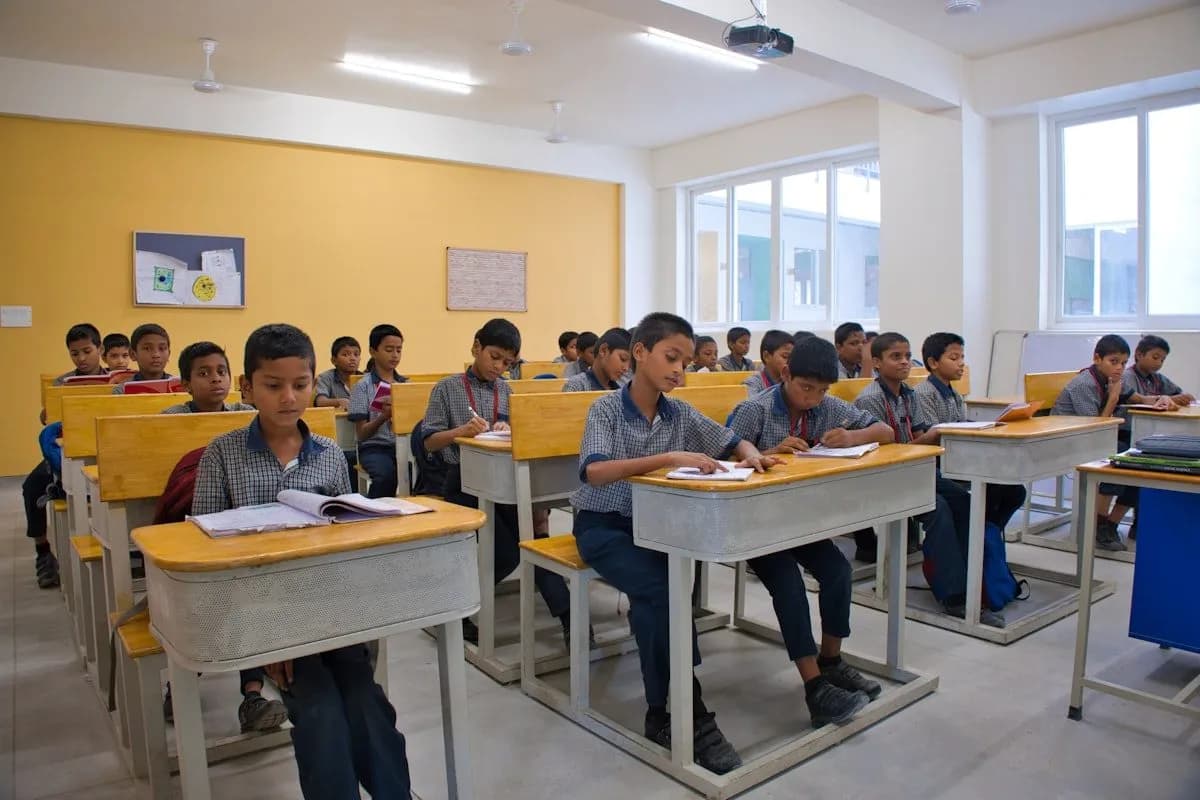
GIDC — Gujarat's Industrial Engine
The Gujarat Industrial Development Corporation (GIDC) is one of India's most successful industrial infrastructure organisations, having developed 230+ planned industrial estates across Gujarat over six decades of operation. These estates collectively accommodate over 10 lakh (1 million) workers, generating a significant share of Gujarat's industrial output and export earnings.
GIDC's industrial estates span every category of industry and every region of Gujarat:
South Gujarat:
Vapi, Umbergaon, Silvassa corridor — dominated by chemical, dye, plastic, and textile industries. Among the oldest and most densely industrialised GIDC zones.
South-Central Gujarat (Bharuch District):
Ankleshwar, Panoli, Jhagadia, Dahej, Vilayat, Amboli — this cluster is the heartland of India's chemical and pharmaceutical manufacturing. Dahej is home to major petrochemical and refinery-grade industries (PCPIR — Petroleum, Chemicals and Petrochemicals Investment Region). Ankleshwar hosts the largest concentration of API manufacturers and dye-chemical industries in Gujarat.
Ahmedabad Region:
Vatva, Naroda, Odhav, Bavla — chemical, dye, engineering, and pharmaceutical industries in close proximity to Ahmedabad city.
Central Gujarat:
Waghodia, Savli, Makarpura, Gotri — auto, engineering, pharma, and general manufacturing near Vadodara.
North Gujarat:
Kadi, Unjha, Mehsana — pharmaceutical, agro-chemical, and food processing industries.
Surat Region:
Sachin, Palsana, Kim — textile, diamond processing, chemical, and engineering industries.
For manufacturers across all these clusters, GIDC provides the base infrastructure — roads, power lines, water supply mains, sewerage trunk lines, and telecommunications. But everything within the plot boundary — the factory building, utility block, ETP, internal roads, ESR, and all other civil structures — is the manufacturer's responsibility, executed through their chosen civil contractor.
What Civil Work Does a GIDC Factory Project Need?
A complete greenfield industrial project in a GIDC plot involves substantial civil scope:
GIDC Plot Development:
The raw GIDC plot is typically a levelled but undeveloped plot with boundary pillars. The first civil task is developing the plot: setting out the site, establishing finished floor levels, grading the plot for drainage, constructing the boundary wall (per GIDC's specification), and preparing sub-grade for the internal road network.
Factory Building:
The main factory/production building can be RCC framed (preferred for multi-storey or heavy load structures), PEB steel frame (faster for large-span single-storey factories), or a combination. Civil scope for RCC buildings includes column foundations, plinth beams, columns, beams, slabs, staircase, brick/block infill walls, and internal finishes. For PEB buildings, civil scope includes pile or isolated column foundations, grade slab, plinth retaining wall, and the anchorage system for PEB column bases.
Utility Block:
Every industrial plant requires a dedicated utility zone — either as a separate building or a defined wing of the main building. Civil scope includes foundations and structure for: boiler house (with chimney foundation), chiller room, DG room (with sound walls), AHU room (with vibration mounts and access walkways for ductwork), compressed air plant, cooling tower basin, and pump rooms.
ETP Civil Works:
Mandatory for all GIDC industries discharging trade effluent per GPCB norms. Civil scope: equalization tank, primary treatment, biological treatment, secondary clarifier, sludge handling, chemical dosing, lab building, control room, and boundary wall around ETP area.
Overhead Water Storage Tank (ESR):
RCC overhead tank (typically 50,000 to 3,00,000 litre capacity) on RCC staging, providing pressure for factory water supply and fire hydrant network.
Underground Fire Water Storage Tank:
GIDC fire safety norms require a minimum fire water storage reserve (typically 10,000 to 50,000 litres depending on plant hazard category). An underground RCC sump with submersible fire pump pit is the standard civil solution.
Internal Roads:
Designed for the heaviest vehicle accessing the plant — typically a 20-tonne tanker. Standard specification: 225 mm WBM base + 75 mm DLC + 50 mm BT surface, with concrete curb and gutter.
Stormwater Drainage:
GIDC requires a proper stormwater drainage network discharging to GIDC's estate drain. The civil contractor designs and constructs the internal stormwater drain network including silt trap chamber at the GIDC drain connection point.
Compound Wall and Security:
A GIDC-specification compound wall (minimum 2.4 m height, RCC or brick) with guard cabin at the main gate and secondary gate.
Industry-Specific Civil Requirements in GIDC
Different industries in GIDC have distinct civil requirements that a generic civil contractor may not be aware of. VRSIPL's 60+ GIDC project portfolio spans all these industry types:
Pharmaceutical and API Industry:
GMP (Good Manufacturing Practice) compliance drives every civil decision. Production floor specification: M30 concrete, power float finish, slope to floor drains, base suitable for epoxy coating. Cleanroom area: RCC base structure built to ±3mm flatness tolerance, wall base for aluminium partition system. Cold storage (for APIs requiring temperature-controlled storage): RCC structure with PUF insulation panel civil support provisions, sealed vapour barrier, and refrigeration equipment bases. Solvent storage: RCC bund wall designed to contain 110% of largest tank, impervious floor with HDPE liner or epoxy coating. Solvent storage is a GIDC fire department requirement and must be physically separated from the factory building.
Chemical and Dye Manufacturing:
Chemical plants require acid-resistant flooring in production areas where chemicals are handled at ambient pressure. Standard spec: acid-resistant brick tile over epoxy primer, jointed with acid-proof cement mortar. Chemical containment bund walls around storage tank farm areas: RCC bund with acid-resistant coating, designed for specific chemical containment per GPCB requirements. Heavy equipment foundations: batch reactors (3,000–10,000 litre capacity glass-lined vessels) weigh 3–8 tonnes empty, 8–20 tonnes full. Foundation design must account for full liquid load, agitator torque loads, and static equipment loads.
Food Processing:
Hygienic design is mandatory for all food-contact areas. Civil floors must achieve SS (Stainless Steel) drain channel level integration — drain channels are cast-in during floor construction with precise slope to ensure no pooling. Floor finish: epoxy resin or polyurethane screed applied on RCC base — civil must achieve substrate flatness of ±2 mm. Cold storage civil: insulated floor slab with anti-frost protection layer, refrigeration machinery room slab reinforced for heavy refrigeration package loads.
Auto and Engineering:
Heavy-duty VR (Vibration Resistant) floor slab: typically 200–300 mm thick M35 concrete with shrinkage-compensating admixture and polypropylene fibre, designed for 10–30 tonne forklift and AGV loads. EOT crane runway beam: corbel system (RCC corbel cast monolithically with building column) or embedded steel bracket system, designed for 20–100 tonne crane load, critical for precision machining shops where floor vibration from crane affects machine accuracy. Deep equipment pits: machining centres, transfer lines, and press foundations require pits 2–5 m deep with access stairs, drainage sumps, and coolant collection channels.
GIDC Approvals a Civil Contractor Must Know
Successfully executing GIDC factory civil requires navigating a multi-agency regulatory approval process. VRSIPL's experience across 60+ GIDC projects has built institutional knowledge of this process that benefits every client:
GIDC Plot Allotment Conditions:
Every GIDC plot comes with specific conditions of allotment — permissible covered area, FAR, setbacks, building height limits, and mandatory green belt. Any factory plan that exceeds these limits or violates setbacks will be rejected by GIDC Estate Office. VRSIPL reviews allotment conditions before design begins to ensure the factory layout is compliant.
GIDC Estate Office — Factory Plan Approval:
The factory building plan (ground floor plan, elevation, section, structural drawings) must be submitted to the GIDC Estate Manager for approval before construction. Approval processing typically takes 2–6 weeks. VRSIPL's project team prepares and submits GIDC plan approval drawings — reducing this burden on the client.
GPCB Consent to Establish (CTE):
For any industry that will discharge trade effluent, GPCB CTE must be obtained before construction of ETP civil works. CTE requires submission of ETP process design, civil layout plan, and an undertaking on ETP completion before production begins. VRSIPL co-ordinates with the client's GPCB consultant on CTE application support.
GPCB Consent to Operate (CTO):
Before production begins, GPCB inspects the completed ETP and issues CTO. The ETP must match the GPCB-approved design exactly — both process and civil — to get CTO. VRSIPL builds ETP civil strictly to the GPCB-approved drawings, ensuring first-time CTO approval.
Fire NOC — GIDC Fire Department:
GIDC's fire department inspects the completed plant for fire safety compliance before issuing the Fire NOC. Requirements include adequate fire water storage, hydrant network at specified spacing, sprinkler system (for hazardous industries), emergency exit doors with panic bar, and fire extinguisher provisions at civil locations. VRSIPL builds all fire-related civil elements to GIDC fire department specifications.
Factory Inspector — Factories Act Approval:
Under the Gujarat Factories Act, the factory occupier must obtain approval from the Factory Inspector before occupying the factory. The Inspector reviews the factory plan for safety compliance. VRSIPL prepares the factory plan approval drawings in the required format for Factory Inspector submission.
VRSIPL's GIDC Project Portfolio
VRSIPL has been executing industrial civil projects in GIDC Gujarat since the 1980s — over four decades of GIDC experience. With 60+ industrial civil projects completed across the full spectrum of GIDC clusters, VRSIPL is among the most experienced industrial civil contractors in Gujarat.
Our GIDC project portfolio by geography:
Dahej GIDC:
Petrochemical plant civil works, pharmaceutical plant civil, and utility building construction for companies in the PCPIR zone.
Ankleshwar GIDC:
API plant civil, bulk drug manufacturing plant civil, CETP civil works, and ETP civil for dye and specialty chemical manufacturers.
Panoli GIDC:
API and formulation plant civil, ETP civil, utility building construction.
Bharuch District:
Chemical plant civil, solvent storage area bund wall, and factory building construction for medium and large chemical manufacturers.
Vatva and Naroda GIDC (Ahmedabad):
Dye and chemical plant ETP civil, factory building construction, utility block, and ESR construction.
Sachin GIDC (Surat):
Textile processing plant civil, chemical plant ETP, and factory civil for engineering industries.
Waghodia, Savli, Halol, Makarpura (Vadodara region):
Auto ancillary factory civil, engineering plant civil, pharmaceutical factory civil, and ETP civil.
Across these projects, VRSIPL has constructed over 5 lakh sq.m. of industrial building area, 50,000+ cubic metres of watertight RCC tank structures, and 300+ km of underground pipeline within industrial plots.
Our GIDC clients — ranging from multinational pharmaceutical subsidiaries to large Indian chemical groups to MSME factory operators — return to VRSIPL for expansion civil works, which is the clearest indicator of sustained client satisfaction.
FAQ — Industrial Civil EPC Contractor in GIDC Gujarat
Q1: Can VRSIPL take on a GIDC factory civil project from design stage to handover on a turnkey basis?
Yes. VRSIPL accepts civil design-and-build contracts for GIDC factory projects where we engage empanelled structural consultants to produce GIDC-approval-format drawings and structural design, and execute construction under our own project management. The client provides the production process brief and equipment layout, and VRSIPL delivers a GIDC-approved, ready-to-occupy factory complete with ETP civil, utilities, external works, and all required regulatory approvals.
Q2: Does VRSIPL handle both factory civil and ETP civil under one contract?
Yes — and we strongly recommend this approach. A single civil contractor for factory + ETP eliminates interface disputes (who is responsible for the ETP approach road? who maintains the common drainage system during construction?) and gives the client a single point of accountability for the entire civil civil package. VRSIPL has extensive experience managing both scopes concurrently.
Q3: What is the typical cost per square metre for a GIDC factory civil package including ETP and utilities?
For a medium-complexity pharma or chemical plant in GIDC (RCC frame factory + utility block + ETP + external works), a blended cost of ₹25,000–45,000 per sq.m. of factory built-up area is a reasonable planning estimate. This range varies with floor specification (GMP floor vs standard industrial floor), ETP volume and complexity, and site conditions. Simple engineering/auto ancillary factories without ETP or cleanroom requirements can be built for ₹18,000–25,000 per sq.m. VRSIPL provides detailed estimates after reviewing the client's plot plan and production brief.
Q4: How does VRSIPL manage multiple sub-contractors and vendors on a complex GIDC factory project?
VRSIPL operates as the principal civil contractor — we self-execute the major civil activities (concrete work, reinforcement, shuttering, masonry, plastering, flooring) using our own trained labour teams. Specialist activities (waterproofing, epoxy floor application, structural steel fabrication for PEB anchor bases) are subcontracted to pre-vetted specialist subcontractors who work under VRSIPL's quality and safety management system. Equipment vendor co-ordination (alignment of civil dimensions with equipment GA drawings, anchor bolt setting out, foundation handover) is managed directly by VRSIPL's site project manager.
Q5: Which GIDC estates does VRSIPL currently have active projects in?
VRSIPL is currently active across GIDC estates in Vadodara, Bharuch, Ankleshwar, Dahej, and Ahmedabad regions. Our Vadodara corporate office provides close oversight for all Gujarat projects. For new project enquiries from any GIDC estate across Gujarat, VRSIPL can mobilise within 4–6 weeks of contract award, subject to site readiness and design availability.
Related Topics
Continue Reading
Related Articles
Pharma Plant Civil Construction in GIDC Gujarat — Site Development to Handover
ETP and ZLD Civil Works for Chemical Industries in GIDC — Complete Guide
MIDC Industrial Civil Contractor — Factory & Plant Civil Works in Maharashtra
Our Related Services
VRSIPL Services Covered in This Guide
Start Your Project
Have an Infrastructure Project?
Contact VRSIPL.
48 years of civil EPC delivery across India — WTP, STP, ETP, industrial civil, power plant, roads, and railways. Class-AA Gujarat. ISO 9001 | 14001 | 45001.