
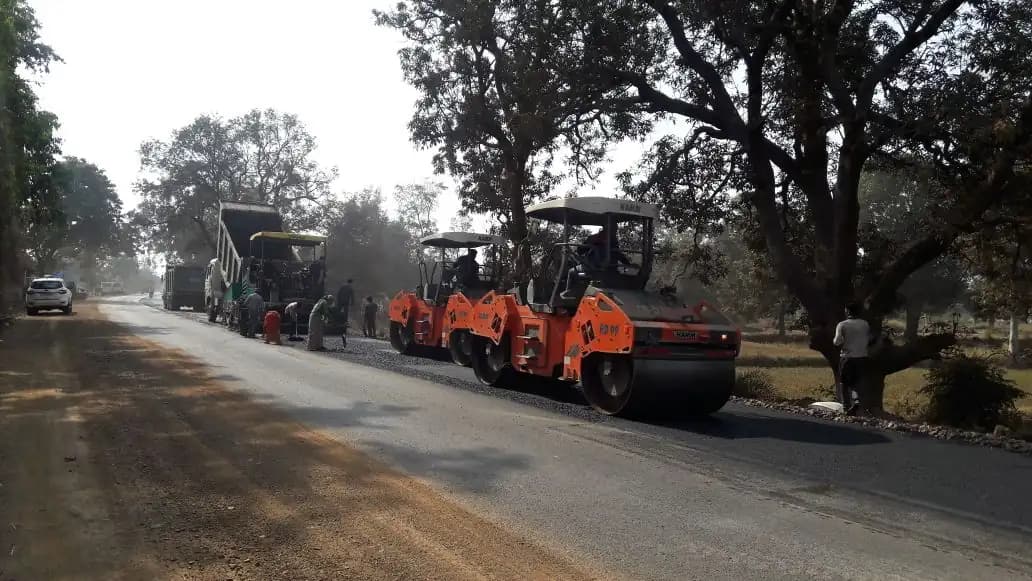
Why Contractor Selection Matters More Than Price
In Indian infrastructure procurement — both government and private — there is a persistent tendency to select contractors on the basis of the lowest quoted price. The logic is straightforward: lower cost means better value for the project owner. But this logic breaks down almost completely in civil construction, and the evidence is all around us.
Low-cost contractors routinely cause: quality failures that require demolition and rework (costing 2–5x the original saving), schedule overruns that trigger liquidated damages and delay associated project revenue, disputes and arbitration that consume years of legal cost and management bandwidth, and sometimes complete contractor abandonment when the project becomes financially unviable for the under-priced contractor.
For government projects, these failures have additional consequences: public money is wasted, infrastructure delivery to beneficiaries is delayed, and the project authority faces audit scrutiny and political accountability. A 5% price saving in contractor selection can easily translate into a 30–50% cost overrun over the project life when the consequences of contractor failure are counted.
This is why the most sophisticated project owners — NTPC, NPCIL, NHAI, large private-sector manufacturers — invest heavily in pre-qualification and contractor evaluation before price is ever considered. The framework below captures the essential elements of that evaluation.
10 Things to Check Before Awarding a Civil Contract
1. Government Registration Class
For any government-funded project (NHAI, PWD, GWSSB, PHED, Smart City, AMRUT), the contractor must hold the requisite class registration. In Gujarat, the highest class is Class-AA (for contracts above ₹50 crore). In Madhya Pradesh, Class-I CPWD. In Maharashtra, Class-I with MHADA or PWD. For CPWD projects centrally, Class-IA is the highest. Verify that the registration is current (annually renewed), covers the relevant category of work (civil, electrical, composite), and that the contractor's financial limits under the registration cover the project value.
2. ISO Certifications
ISO 9001:2015 (Quality Management System) is the baseline — it ensures that the contractor has documented procedures for concrete quality control, material inspection, non-conformance management, and internal audits. ISO 14001:2015 (Environmental Management System) demonstrates systematic environmental controls — critical for projects near water bodies, forests, or habited areas. ISO 45001:2018 (Occupational Health and Safety) demonstrates that safety is managed systematically, not reactively. Demand to see the ISO certificate (verify it is from an accredited certification body, not a fake certificate), and ask for the last internal audit report.
3. Sectoral Track Record
General civil experience means little if it isn't in your specific sector. A contractor who has built 100 km of highways but never built a water treatment plant should not be awarded a WTP civil contract. Ask for a sector-specific project list: for a pharma factory, see pharma factory references. For an STP, see STP references. Look for project scale (contract value, quantum of work) similar to your requirement. Visit at least 2 completed projects to assess workmanship quality.
4. Equipment Fleet Owned
A civil contractor's production capacity is limited by their equipment fleet. Ask for an equipment list with ownership documents (RC book, loan-free certificate or hypothecation details). Key equipment: concrete batching plant(s), transit mixers, concrete pumps, tower cranes or mobile cranes, excavators, compactors, and pipe laying equipment if relevant. A contractor who rents most of their equipment faces availability risk when multiple projects compete for the same equipment pool.
5. Technical Manpower — Engineers Deployed
Ask for the contractor's actual engineering headcount: how many Graduate Civil Engineers are on the rolls? How many site engineers are typically deployed per crore of work? A rule of thumb: a well-resourced contractor deploys 1 graduate engineer for every ₹2–3 crore of annual turnover. For a ₹100 crore project, expect at least 15–20 full-time engineers. Also ask about QA personnel specifically — are there dedicated quality engineers, or does the site engineer double up on QA?
6. Financial Capability
Civil contractors need working capital to purchase materials, pay wages, and bridge the gap between work execution and payment. A financially stressed contractor cuts corners on materials, delays payments to sub-contractors (causing their withdrawal), and eventually stalls on site. Key checks: (a) Annual turnover in the last 3 years — look for consistent growth and no sudden drop; (b) Bank credit limit (Cash Credit/OD limit) — a proxy for working capital access; (c) Banker's certificate of solvency; (d) No active arbitration or court cases involving unpaid dues to material suppliers or sub-contractors.
7. Safety Record
Ask for the contractor's last 3 years' safety statistics: Lost Time Injuries (LTI), Fatal Accident Rate, and Total Recordable Incident Rate (TRIR). A contractor with a poor safety record is not just an ethical concern — it is a project risk. A major accident on your project site creates regulatory shutdown (Labour Commissioner, PESO, Factory Inspector), media exposure, and significant delay. Ask for their most recent safety audit report and check whether they have a full-time Safety Manager on their rolls.
8. Client References
Do not rely only on the contractor's self-reported project list. Independently contact at least 3 client references — specifically the Project Manager or Resident Engineer who worked with the contractor on that project. Ask: (a) Was the project completed on time? (b) Was the quality of concrete work satisfactory? (c) Were there disputes? (d) Would you hire this contractor again? Reference checks take 30 minutes and can save crores.
9. Legal and Arbitration History
A contractor with multiple pending arbitrations — whether as claimant or respondent — is a red flag. Large arbitration claims suggest dispute-prone behaviour, financial stress, or poor project execution. Ask the contractor to declare all current and past arbitration/litigation cases involving project contracts, and verify through public records where possible (NHAI and PWD arbitration cases are often in the public domain).
10. Tie-Up with Equipment/Specialist Vendors
For complex projects — STP, ETP, WTP, power plant civil — the civil contractor must interface with multiple equipment vendors. Ask whether the contractor has prior working relationships with major equipment suppliers in your sector. A civil contractor who has worked with the equipment vendor on past projects will have established interfaces, known dimensions, and fewer surprises during construction.
Government vs Private Sector Contractor Selection
The approach to contractor selection differs meaningfully between government and private sector projects:
Government Projects:
Selection is governed by state/central PWD rules, GFR (General Financial Rules), and programme-specific guidelines (NHAI manual, AMRUT procurement guidelines, JJM state programme manuals). The process is typically: pre-qualification tender (PQQ/NIT) → evaluation of technical and financial pre-qualification criteria → issue of tender documents → bid evaluation (technical + financial or L1 price-only) → award. The entire process can take 6–12 months. Pre-qualification criteria are set in advance and cannot be waived — a contractor who misses one PQ criterion is disqualified regardless of otherwise strong track record.
Private Sector Projects:
Private sector owners — pharmaceutical manufacturers, industrial groups, real estate developers — have more flexibility. They typically shortlist 3–5 contractors, issue requests for proposal (RFP), evaluate technical proposals (methodology, programme, team), and then open financial bids only from technically qualified bidders. This approach allows the owner to select a contractor with a strong technical record even if they are not the lowest price bidder — provided the owner is willing to justify the premium for quality. VRSIPL has been consistently selected by discerning private sector clients through this two-stage approach.
Why VRSIPL Qualifies on All 10 Criteria
VRSIPL — Velji Ratna Sorathia Infra Private Limited — measures positively against every criterion in the framework above:
1. **Class-AA Registration (Gujarat PWD)** — the highest class in Gujarat, plus Class-I credentials for MP, Rajasthan, and central government (CPWD) work.
2. **Five Certifications** — ISO 9001:2015, ISO 14001:2015, ISO 45001:2018, ISO 50001:2018, and SA 8000:2014 — all from accredited certification bodies with active annual surveillance audits.
3. **48 Years of Sector-Specific Track Record** — water supply (45+ WTP civil projects, 3,000+ km pipelines), wastewater (40+ STP, 25+ ETP projects), industrial civil (60+ GIDC/MIDC factory projects), power (15+ power projects, 1,500+ MW capacity served), roads (2,500+ km), bridges (50+ structures).
4. **500+ Equipment Fleet** — including owned concrete batching plants, transit mixers, mobile cranes, tower cranes, excavators, pipe laying equipment, compactors, and dewatering pumps.
5. **300+ Engineers on Rolls** — graduate civil engineers, structural engineers, QA/QC engineers, safety officers, and project managers with relevant sectoral experience.
6. **Financial Strength** — ₹2,000 crore+ active order book, consistent annual turnover growth, strong banking relationships, no financial stress indicators.
7. **Strong Safety Record** — dedicated HSE team, site-level safety officers, regular third-party safety audits, and a proactive safety culture aligned with ISO 45001.
8. **Verifiable Client References** — GWSSB, NPCIL, NTPC, Smart City SPVs, GIDC pharma manufacturers, and municipal corporations across Gujarat and MP.
9. **Clean Legal Record** — no major pending arbitration or disputes with clients or subcontractors. VRSIPL's project execution philosophy prioritises early conflict resolution and contractual performance.
10. **Strong Vendor Relationships** — long-standing working relationships with WTP/STP/ETP equipment suppliers, pipe manufacturers, and PEB system suppliers across the water and industrial sectors.
FAQ — Choosing an EPC Civil Contractor in India
Q1: Is the lowest bidder always the riskiest choice for a civil contract?
Not always — but in India's civil contracting market, L1 (lowest price) bids that are more than 10–15% below the engineer's estimate should be treated as a serious red flag and investigated carefully. An abnormally low bid can indicate: incorrect understanding of scope, deliberate price-dumping to win the contract followed by claims later, poor quality standards, or a financially desperate contractor accepting below-cost work. Many government authorities now have provisions for rejecting "abnormally low bids" after analysis — a practice VRSIPL strongly supports.
Q2: How do I verify a contractor's ISO certificate is genuine?
Ask for the name of the certification body and the certificate number. Check the certification body's website — most accredited certification body websites (like Bureau Veritas, TUV SUD, DNV GL, SGS) have a certificate lookup tool where you can verify the certificate number, scope, and validity. Also check whether the certification body is itself accredited by QCI-NABCB (Quality Council of India — National Accreditation Board for Certification Bodies) — the Indian authority for ISO accreditation.
Q3: Should I insist on the contractor directly employing (rather than subcontracting) certain key activities?
Yes — for quality-critical activities. Watertight concrete for STP/WTP tanks, turbine foundation concrete, industrial floor finishing, and pile foundation execution should ideally be done by the contractor's own specialised teams, not subcontracted to lower-tier labour contractors. Ask specifically which activities the contractor will execute with their own employees (not through subcontractors), and which will be subcontracted. A reputable contractor will be transparent about this.
Q4: What warranty or defect liability does VRSIPL offer on civil construction?
VRSIPL provides a standard Defect Liability Period (DLP) of 12 months for most civil contracts, and up to 36 months for waterproofing and watertight concrete structures on request. During DLP, VRSIPL rectifies any civil defects (cracking, leakage, settlement, finish failures) at no cost to the client. Beyond DLP, VRSIPL remains available for consultation on any civil issues arising from our construction, and has maintained long-term relationships with clients who return to us for additional civil work years after project completion.
Q5: Does VRSIPL accept turnkey (design + build) contracts for industrial civil projects?
Yes. VRSIPL accepts civil design-and-build contracts where we are responsible for both structural/civil design (through our empanelled structural consultants) and construction execution. We also accept civil-only build contracts where the client provides approved structural drawings. For government contracts, design-and-build is increasingly the preferred mode — and VRSIPL has executed design-build civil contracts for WTP, STP, and road projects.
Related Topics
Continue Reading
Related Articles
Pharma Plant Civil Construction in GIDC Gujarat — Site Development to Handover
Choosing an STP Civil Contractor in India — Municipal & Industrial Guide 2026
ETP and ZLD Civil Works for Chemical Industries in GIDC — Complete Guide
Our Related Services
VRSIPL Services Covered in This Guide
Start Your Project
Have an Infrastructure Project?
Contact VRSIPL.
48 years of civil EPC delivery across India — WTP, STP, ETP, industrial civil, power plant, roads, and railways. Class-AA Gujarat. ISO 9001 | 14001 | 45001.